Introduction to Literary Criticism Literary Theory
Literary theory, also known as critical theory or simply theory, forms the foundation of literary studies. It provides the concepts and assumptions necessary for interpreting texts. Theory defines what counts as “literary” and what criticism seeks to achieve. For instance, Aristotle’s ideas influence the way we talk about the “unity” of Oedipus the King, while Achebe’s critique of Conrad’s Heart of Darkness is shaped by postcolonial theory. Though not always acknowledged, theory underpins all critical practice, and its role within academia continues to evolve.
Philosophical Roots of Literary Theory
The history of literary theory parallels philosophy, stretching back to Plato. In works like the Cratylus, Plato questioned the relationship between words and meanings, a concern revisited in modern Structuralism and Poststructuralism. While Plato doubted the natural link between words and reality, much of Western thought upheld the belief that literature mirrors objective truth. Up until the 19th century, art was widely seen as a faithful reflection of the real world.
Evolution of Modern Literary Theory
Modern literary theory emerged in 19th-century Europe. German higher criticism analyzed biblical texts historically, while French critics like Saint Beuve linked literature to biography. This view was challenged by Proust, who argued that art transforms life experiences. Nietzsche’s skepticism toward knowledge—his claim that facts exist only through interpretation—profoundly shaped modern theory, paving the way for ongoing debates in literary studies.
Traditional Criticism vs. Modern Theory
Before the rise of New Criticism in the United States, literary criticism focused on history, biography, morality, and aesthetics. Critics worked with a shared sense of the literary canon and its purposes. Literature was studied as a source of culture and morality. Modern literary theory, however, questioned these assumptions, shifting toward new interpretive frameworks that challenged established traditions.
Greek Critical Tradition – Plato
Plato, a disciple of Socrates, focused more on philosophy than literature but offered significant ideas on art. For him, art is twice removed from reality: objects are already imperfect copies of ideas, and art merely imitates these copies. He argued that poetry is dangerous, as it appeals to emotions rather than reason, fails to provide knowledge, and often lacks moral value. Plato criticized drama for using cheap techniques to win audiences and for presenting flawed characters that encourage negative behavior. He also rejected the pleasure of tragedy and comedy, claiming they misguide emotions. On style, Plato insisted that a speaker must have knowledge, natural talent, practice, logical order, and awareness of audience psychology.
English Critical Tradition – From Sidney Onwards
English criticism began in the Renaissance with Sir Philip Sidney’s The Defence of Poesie. This tradition evolved through Dryden in the Restoration, Pope and Fielding in the 18th century, Wordsworth, Coleridge, and Shelley in the Romantic period, and Arnold, Ruskin, Pater, and James in the Victorian era. Many of these critics combined literary practice with critical thought, blending classical traditions with innovative ideas. Their works ranged from defending literature’s value to shaping new genres and movements. By the Victorian age, criticism began transitioning from subjective and prescriptive approaches to the more independent and systematic methods that defined 20th-century theory.
Literary Theory as an Ongoing Process
The word “theory,” from the Greek theoria, means “a view,” reminding us that every theory provides only a perspective, not a complete explanation. While older movements like Deconstruction or the Leavis School have faded in influence, their ideas remain relevant. In the 20th century, Marxism, Feminism, and Postmodernism broadened literary studies into cultural studies, treating all human discourses as texts. These movements emphasized economics, gender, and the instability of meaning, reshaping how literature is analyzed. Today, literary theory draws on multiple disciplines—linguistics, anthropology, psychoanalysis, philosophy—making it an interdisciplinary field. Some theories rise in popularity while others decline, but all contribute to the dynamic landscape of literary studies.
What is Liberal Humanism?
Liberal Humanism is a philosophical and literary movement which places human beings and their capabilities at its center. It is grounded in the belief that human nature is fixed and constant, and that literature reveals these universal truths about humanity. The term gained currency in the 1970s when literary theory emerged as a distinct field, and critics began to describe earlier approaches as “theory before theory.” The word liberal in this context indicates that it is not politically radical, while humanism implies an emphasis on human values rather than Marxist, feminist, or structuralist perspectives. Thus, Liberal Humanism regards literature as timeless, universal, and concerned with human essence rather than political or ideological commitments.
Trace the Evolution of Liberal Humanism.
Liberal Humanism has its beginnings in the early nineteenth century with the rise of English Studies. Between 1930 and 1950, its principles became fully articulated, although they were later challenged by Marxism, Feminism, and other critical theories in the 1960s. Early proponents like F.D. Maurice argued that English literature connected readers to what is “fixed and enduring” in their national identity. Liberal Humanism also shaped the scientific, rational worldview of the modern West, encouraging belief in individuality, common human nature, and universal truth. Critics like I.A. Richards further developed methods such as “Practical Criticism,” which isolated the text from context, ensuring that meaning could be derived from the work itself without ideological bias.
Explain the Emergence of English as an Academic Subject.
Until the early nineteenth century, English was under the monopoly of the Church of England. At Oxford and Cambridge, only male Anglican communicants were admitted, while Catholics, Jews, and others were excluded. This changed in 1826 with the establishment of University College London, which opened higher education to a wider group of people. In 1840, F.D. Maurice, as professor at King’s College London, introduced the study of set texts, laying foundations for Liberal Humanist principles. However, it was Matthew Arnold who is traditionally credited with establishing Liberal Humanism as a critical framework. Later, I.A. Richards pioneered “Practical Criticism” at Cambridge, emphasizing close reading of texts without reference to history or context, which became central to English studies.
The Key Critics of Liberal Humanism and their Contributions.
The roots of Liberal Humanism can be traced to classical, Romantic, and Victorian critics. Aristotle, in Poetics, defined tragedy, the role of plot and character, and the concept of catharsis, establishing one of the earliest frameworks for literary analysis. Samuel Johnson advanced criticism further with works like Preface to Shakespeare, applying close scrutiny to literature beyond religious texts. The Romantic poets deepened critical thought—Wordsworth emphasized poetry as the “spontaneous overflow of powerful feelings,” while Coleridge in Biographia Literaria stressed imagination and language. Keats introduced the idea of “Negative Capability,” and Shelley highlighted poetry’s role in defamiliarizing the familiar. The Victorians, particularly Matthew Arnold, gave structure to English studies. Arnold introduced the Touchstone Method and argued for literature as a substitute for religion. In the twentieth century, T.S. Eliot contributed concepts like “impersonality,” “dissociation of sensibility,” and the “objective correlative,” which became central to literary criticism.
Describe the Ten Tenets of Liberal Humanism.
Liberal Humanism is guided by ten core principles, often called its tenets. Firstly, good literature is considered timeless and universal, transcending the conditions of its age. Secondly, the meaning of a literary text is believed to reside within itself, not requiring external context. Thirdly, texts should be studied in isolation, free from ideology or politics. Fourthly, human nature is seen as unchanging, and literature reflects recurring emotions and experiences. Fifthly, individuality is considered essential and innate, transcending social or linguistic influences. Sixthly, literature’s purpose is to enhance life, but in a non-political and non-programmatic way. Seventhly, form and content are fused organically within literature, not imposed externally. Eighthly, sincerity in language is valued, avoiding clichés or artificiality. Ninthly, “showing” through enactment is preferred over “telling” or abstract explanation. Finally, criticism’s role is to interpret the text for the reader, without burdening it with unnecessary theoretical frameworks.
Formalism
Formalism in literary criticism is a method of analysis that concentrates on the text itself, rather than the life of the author or the surrounding social, political, or historical contexts. The idea stems from the belief that the form of a literary work is inseparable from its content, and to separate the two would be misleading. Formalists aimed to establish literature as a discipline with its own scientific rigor by examining how form creates meaning and tracing the evolution of literary forms over time.
In simple terms, Formalists held that the proper focus of literary study should be the work itself. Art, according to this school of thought, is created by following particular rules and logics, and new artistic forms emerge as breaks from earlier conventions. The central task of the critic, therefore, is to analyze the specific features that make a literary work distinct from ordinary writing—what they termed its literariness.
The History of Formalism
Formalism was never a single unified school but rather a collection of approaches that emphasized form in different ways. In the United States and United Kingdom, it gained prominence through the “New Critics” such as I.A. Richards, John Crowe Ransom, C.P. Snow, and T.S. Eliot. On the European continent, Russian Formalism developed in Moscow and Prague with major figures like Roman Jakobson, Viktor Shklovsky, and Boris Eichenbaum. While Russian Formalism and Anglo-American New Criticism shared similarities, they evolved independently and diverged in significant ways.
By the late 1970s, Formalism lost favor as new approaches—such as Post-structuralism, Deconstruction, and Cultural Studies—began to dominate, emphasizing politics and social context. For a time, “Formalism” was used negatively, implying an overly narrow focus on the text. However, in recent years, as the dominance of postmodern approaches has waned, many scholars have begun revisiting Formalist methods and acknowledging their lasting value.
Russian Formalism
Russian Formalism emerged with groups like the Society for the Study of Poetic Language (1916) in St. Petersburg and the Moscow Linguistic Circle (1914). Its proponents argued that literature should be studied scientifically, with linguistics as a foundation. They emphasized that literature has its own history of formal innovation, independent from external conditions. Central to their belief was that form is not just an outer shell of content but an integral part of meaning.
Anglo-American New Criticism
New Criticism dominated mid-twentieth-century literary studies in the English-speaking world. New Critics promoted close reading, emphasizing the unity of form and meaning within the text while rejecting biographical or historical analysis. At their best, they produced brilliant and wide-ranging interpretations, but they were sometimes criticized for being overly rigid and ignoring broader contexts. Eventually, New Criticism gave way to more politically oriented theories. Yet in the current climate of literary studies, some of their more nuanced works are being reassessed for their enduring insights.
Key Proponents of Formalism
Among the most influential Formalist critics were Roman Jakobson, Viktor Shklovsky, and I.A. Richards. Jakobson, a member of the Moscow Linguistic Circle, sought to define “literariness” using linguistic theory, strongly influenced by Saussure. Shklovsky, a leading voice, introduced two key concepts: defamiliarization and the plot/story distinction. His essay Art as Device challenged prevailing views of literature as either political product or personal expression, instead highlighting the unique nature of literary language.
I.A. Richards was a pioneering figure in English literary criticism and a founder of New Criticism. His works, such as Practical Criticism and The Philosophy of Rhetoric, were foundational for modern literary studies, influencing semiotics, philosophy of language, and rhetoric.
Fundamental Principles
Formalism insists on the autonomy of the text, viewing it as art that must be studied on its own terms, free from external influences like the author’s biography or historical background. Every element of the text is considered integral, with form and content inseparably linked. Formalists stressed the importance of relationships between words, poetic devices, and literary techniques in shaping meaning. They also emphasized the unifying function of paradox, irony, and ambiguity, which create tension within the work.
Shklovsky’s concept of defamiliarization illustrates this well. He argued that everyday life makes us blind to the uniqueness of objects and experiences, but literature renews our perception by presenting the familiar in unfamiliar ways. This makes literature not only more interesting but also deeply meaningful.
Key Concepts
The first essential concept of Formalism is the distinction between literary and practical language. Poetic language differs from everyday communication, and this difference defines the autonomy of literature. Another central concept is defamiliarization, where literary works disrupt ordinary perception to renew how readers see the world.
Shklovsky’s plot/story distinction further underlines the importance of form. While the “story” refers to the chronological sequence of events, the “plot” is how those events are arranged in the text. This distinction highlights how meaning is created not only by what is told but by how it is told.
Another major concept is literariness, which, according to Jakobson, marks what makes a text literary. Formalists identified literary devices as the key carriers of literariness, treating them as structural elements that could be studied scientifically. Finally, Jan Mukařovský’s idea of foregrounding showed how literary language calls attention to itself, creating estrangement and deepening the reader’s engagement with the text.
Allegory
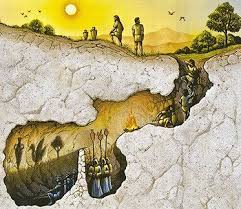
Plato’s Allegory of the Cave (360 BC) illustrates how human perception is limited and filtered by experience.
Allegory can be historical or political, where characters symbolize real-life figures or ideas.
Examples include:
Thomas More’s Utopia (1516) — political idealism through fiction.
John Dryden’s Absalom and Achitophel (1681) — political allegory through biblical parallel.
Bunyan’s The Pilgrim’s Progress (1678) — a journey symbolizing moral and spiritual struggles.
Aesop’s Fables (610 BC) — human behavior represented through animal characters.
Everyman is a classic morality play using allegory to teach virtue.
Spenser’s The Faerie Queene blends moral, historical, and religious allegory in poetic form.
Swift’s Gulliver’s Travels is a satirical allegory critiquing Enlightenment thinking and politics.
Orwell’s Animal Farm (1945) is a political allegory targeting Soviet Russia under Stalin.
Bricolage
Coined by Claude Lévi-Strauss in La Pensée Sauvage (1962), bricolage means creating using what’s at hand.
It refers to mixing and matching elements from different sources to make something new.
Widely seen in:
Popular culture (e.g., music videos, fashion, film).
War of the Worlds (H.G. Wells) has evolved into various modern versions.
Bricolage thrives on reinvention with available material, a hallmark of postmodern creativity.
Animal Farm as Allegory
Orwell satirizes totalitarianism, showing how revolutionary ideals can be corrupted.
Example: “All animals are equal, but some animals are more equal than others” critiques the betrayal of socialist principles.
Characters like Napoleon (Stalin) and Snowball (Trotsky) reflect historical figures and their roles in Soviet history.
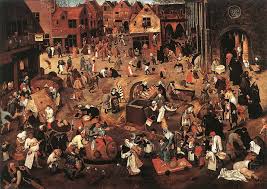
Carnival
Introduced by Mikhail Bakhtin, carnival represents the inversion of societal norms and hierarchies.
During carnival, the line between elite and commoner blurs, enabling free expression.
Example: In Brecht’s Galileo, scientific ideas are debated by commoners and nobles alike, challenging authority.
Dostoevsky’s Bobok also embodies this festive disruption of norms and voices.
Intertextuality
Julia Kristeva introduced the term in 1969, blending Saussure’s semiotics and Bakhtin’s dialogism.
It shows how texts reference, echo, or transform other texts.
Irony is often used alongside, bringing hidden meanings or critique, as seen in:
Socratic dialogues
Shakespeare’s Romeo and Juliet or Sophocles’ Oedipus Rex
Irony reveals human flaws, making it central to satire and literary critique (e.g., Swift’s A Modest Proposal).
Simulation
Originating from Plato, the idea involves representing or imitating the real.
Postmodernism questions the distinction between real and simulated.
Representations can seem “more real than real” (hyperreality).
Films like The Matrix or The Truman Show explore simulated realities as metaphors for modern existence.
Pastiche
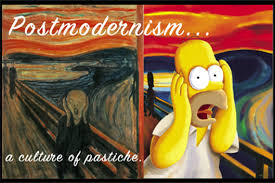
Fredric Jameson distinguishes pastiche from parody.
Pastiche imitates styles without mocking; it mixes genres without judgment.
Examples:
Nabokov’s Pale Fire — blends poetry and fiction.
Fowles’ The French Lieutenant’s Woman — merges historical fiction with metafiction.
A.S. Byatt’s Possession — blends myth, romance, and detective fiction.
Films like Pulp Fiction combine gangster narrative, dark comedy, and romance.
Unreliable Narrator
An unreliable narrator is one whose version of events is questionable or misleading.
This technique highlights gaps between appearance and reality.
Famous examples:
Henry James’ The Turn of the Screw — narrative told through a governess’s ambiguous journal.
The Remains of the Day by Kazuo Ishiguro — the butler Stevens masks his emotional truths.
Films like The Usual Suspects (Kevin Spacey’s character) and Kurosawa’s Rashomon show how narratives vary by perspective.
The device reveals how subjectivity, memory, and denial shape storytelling.
Narrative
A narrative is a structured story, told through prose or verse, involving characters and events.
Barthes notes that narrative is universal — present in myth, painting, cinema, etc.
Gerard Genette emphasized how narratives manipulate time through:
Order (chronology)
Duration (length vs. real-time),
Frequency (repetition).
Ulysses by James Joyce covers one day (June 16, 1904) yet spans hundreds of pages.
Its structure mirrors The Odyssey, drawing parallels between modern life and myth.
Narratology
Tzvetan Todorov coined the term in 1969.
It studies how stories are structured and told — the types of narrators, their perspectives, and storytelling techniques.
Milestones in narrative theory:
Aristotle’s Poetics — defines story structure (beginning, middle, end).
Fielding’s Joseph Andrews — calls fiction a “comic epic in prose.”
Henry James — emphasized how a story is told over what is told.
Wayne Booth’s The Rhetoric of Fiction (1961) — explores narrative voice.
John Barth’s “literature of exhaustion” (1967) — suggests traditional forms are used up, urging experimentation.
Mieke Bal’s Narratology — expands on narrative elements and their functions.
Frankfurt School & Psychoanalysis
Frankfurt School: A group of German Marxist theorists interested in culture, society, and politics.
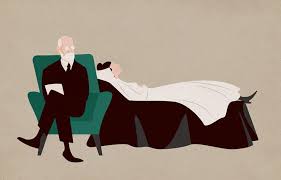
Key Influences: Sigmund Freud and Carl Jung.
Jacques Lacan
Major Work: The Four Fundamental Concepts of Psychoanalysis (Lectures).
Key Concepts:
Phallocentrism
Mirror Stage: The child sees its reflection and begins to form an identity.
Three Developmental Phases:
The Real
The Imaginary
The Symbolic
Builds on Freud’s Oedipus complex (seduction, primal, and castration phases).
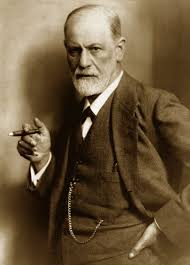
Sigmund Freud’s Theories
Unconscious Mind: A foundational idea for understanding psychological depth in art and literature.
The Interpretation of Dreams:
Introduces dreamwork.
Condensation: One dream image carries multiple associations.
Displacement: The true subject is shifted to something else (metaphorically).
Oedipus Complex:
Controversial idea: every child desires one parent and resents the other.
Applied to literature, e.g., Hamlet:
Hamlet hesitates to kill Claudius because Claudius embodies Hamlet’s own suppressed desires.
Laura Mulvey & Slavoj Žižek
Laura Mulvey:
Known for the concept of the Male Gaze in film theory.

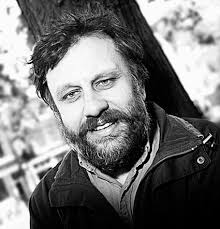
Slavoj Žižek:
Applies psychoanalysis, Marxism, and film theory.
Interprets culture and ideology through Freudian/Lacanian lenses.
Simone de Beauvoir
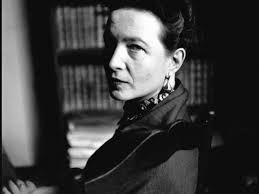
Key Work: The Second Sex (1949)
Famous quote: “One is not born, but rather becomes, a woman.”
Themes:
Myths and stereotypes about women.
Critique of patriarchal structures.
Discussed abortion rights and contraception.
Influenced later feminists like Kate Millett (Sexual Politics).
Betty Friedan
Key Work: The Feminine Mystique (1963)
Based on a survey of college-educated women.
Findings:
Women felt deeply unfulfilled despite “ideal” domestic lives.
These issues lacked a public voice or terminology at the time.
Book critiques:
The post-war ideal of the full-time homemaker.
The myth that women’s fulfillment comes only from motherhood and housework.
Focused on middle-class, suburban women in post-war America.
Helene Cixous, Laura Mulvey, Julia Kristeva
Explored language, psychoanalysis, and feminism.
Themes of female identity, semiotics, and subjectivity.
Elaine Showalter – Gynocriticism
Gynocriticism: Shift from studying women as represented by men to studying women as writers.
Focuses on:
Recovering lost women’s literature.
Studying women’s experience historically and culturally.
Challenging the male-dominated literary canon.
Affective Fallacy
Coined by: William Wimsatt & Monroe Beardsley
Published in: The Verbal Icon (1954)
Definition: A fallacy (critical error) of judging a literary work by the emotional effect it produces on the reader/audience.
Key Idea:
Confusing what a poem is with what it does emotionally.
Leads to impressionism and relativism.
Example:
Calling a film/book “gut-wrenching” or “tear-jerker” judges it by emotion, not form or technique.
Countered:
I.A. Richards (in Principles of Literary Criticism, 1923) valued emotional responses.
Wimsatt and Beardsley critiqued this view.
Contrast:
Aristotle’s “Catharsis” values emotional impact positively in tragedy.
But 20th-century critics argue emotion shouldn’t be the basis for literary evaluation.
Ambiguity
Popularized by: William Empson
Work: Seven Types of Ambiguity (1930)
Definition: A literary device where a word or expression holds two or more meanings.
Described As: “Witty and deceitful” by Empson.
Example:
Humpty Dumpty in Through the Looking Glass explains “slythe” as a portmanteau of “slimy” and “lithe”.
Changing Interpretations:
Uncle Tom’s Cabin:
Sympathetic term during American Civil War (1861–65).
An insult during Civil Rights era (1950s onward).
T.S. Eliot:
Called Hamlet the “Mona Lisa of literature” – deeply ambiguous.
Oscar Wilde’s Reading of Hamlet (De Profundis):
Hamlet is not a hero, but a spectator of his own tragedy.
His madness masks weakness; his doubt is from a divided will, not skepticism.
Intentional Fallacy
Coined by: Wimsatt and Beardsley
Definition: A fallacy/error of interpreting a text based on the author’s intention.
Key Argument:
Authorial intent ≠ Meaning or merit of the text.
Implications:
Challenges autobiographical readings.
Undermines fixed meaning based on creator’s background or purpose.
Shifts focus to the text itself, not its origin.
Related Critical Ideas
New Criticism:
Emphasized close reading and the text itself.
Influenced by Wimsatt, Beardsley, Empson.
Jacques Derrida (1967):
In Writing and Difference, argues difference is essential to literary meaning.
Supports ambiguity as integral to language and literature.
Archetype
Definition:
An archetype is an original pattern or prototype that represents the most typical qualities or characteristics of a class or type.
Origin:
From Greek philosophy — ideas of beauty, truth, goodness, and justice as ideal forms.
Used in:
Archetypal Criticism (a form of literary criticism).
Function in Literature:
Archetypes help in identifying recurring characters, themes, and narrative patterns across cultures and time.
Examples of Archetypes:
Damsel in distress – e.g., Rapunzel
Femme fatale – a seductive woman who leads men to danger
Don Juan – archetypal womanizer or philanderer
The Quest Motif – hero goes on a journey (e.g., Frodo in The Lord of the Rings)
Redemption Ritual – a character atones through suffering
Key Text:
The Hero with a Thousand Faces by Joseph Campbell
Explores universal myths and the hero’s journey (monomyth).
Allusion
Definition:
A brief reference to a person, event, place, or text from history, literature, mythology, or religion.
Purpose:
Creates depth by connecting the present text to cultural memory.
Depends on shared knowledge between the author and reader.
Often used to place a work within a literary tradition.
Types of Allusion:
Literary (e.g., referencing Shakespeare, Dante)
Historical (e.g., the French Revolution)
Mythological (e.g., references to the Odyssey)
Religious (e.g., biblical allusions)
Examples of Allusion:
1. Geoffrey Chaucer – The Canterbury Tales
Chaucer’s Clerk’s Tale alludes to:
Petrarch, who adapted Boccaccio’s story of Patient Griselda.
Chaucer credits “Fraunceys Petrak” in the Clerk’s Prologue: “Fraunceys Petrak, the laureate poet…”
2. T.S. Eliot – The Waste Land
Full of classical and literary allusions:
Shakespeare (Antony and Cleopatra), Dante, Frazer, etc.
Purpose:
Not to show off, but to assert literary tradition.
Connected to Eliot’s essay “Tradition and the Individual Talent” – a modern poet must write within tradition.
3. Modern Examples:
O Brother, Where Art Thou? (Coen Brothers, 2000)
Alludes to Homer’s Odyssey.
No Country for Old Men (Cormac McCarthy)
Title is an allusion to W.B. Yeats’ poem Sailing to Byzantium: “That is no country for old men…”
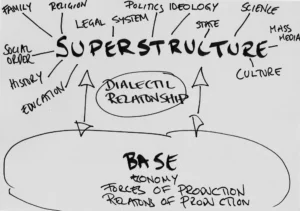
Base and Superstructure (Marxist Theory)
Origin:
A Marxist concept central to understanding class, ideology, and cultural power.
Definitions:
Base (Infrastructure):
Refers to the economic foundation of society.
Includes:
Means of production (factories, land, capital, tools).
Relations of production (relationship between bourgeoisie and proletariat).
Controlled by the bourgeoisie, who exploit the proletariat (working class).
Superstructure:
Built on top of the base; includes institutions and ideologies.
Examples:
Religion, Politics, Education, Family, Law, Mass Media, Literature.
Its role: to legitimate and maintain the base by reinforcing bourgeois ideologies.
Key Idea: The base determines the superstructure, and the superstructure justifies the base — helping to preserve the status quo.

Antonio Gramsci – Hegemony
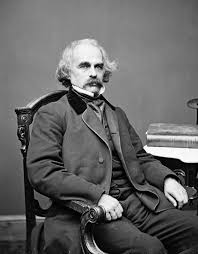
Who:
Italian Marxist thinker and political theorist.
Key Concept: Hegemony
Definition: The dominance of a ruling class not just through force, but by gaining the consent of the subordinate classes.
Dominant groups (e.g., white, middle-class, heterosexual males) make their worldview appear universal and “natural”.
Subordinates willingly accept the status quo because they believe it benefits them.
Hegemony is sustained through culture, not just through coercion, but also through desire to belong.
Culture: A Contested Term
Key Thinkers:
Matthew Arnold – Culture and Anarchy (1867)
Culture = “The best that has been thought and said.”
Focus on refined, civilized values (elitist/classist approach).
T.S. Eliot – Notes Towards the Definition of Culture
Culture is more than survival; it includes aesthetic refinement (e.g., cuisine vs. just food).
“Culture is that which makes life worth living.”
Raymond Williams – Culture and Society (1958)
Critiques Arnold’s elitist view.
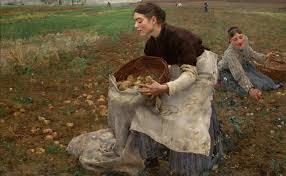
Views culture as ordinary – produced, circulated, and consumed by everyday people.
Emphasizes the role of literature and art in shaping and reflecting social values.
Adorno & Horkheimer (Frankfurt School)
Criticized mass/popular culture as a tool for ideological control (Culture Industry thesis).
Argued that culture can be used to manipulate and pacify the masses.
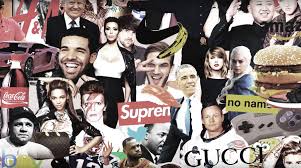
Popular Culture

Includes films, music, television, books, social media, etc.
Plays a crucial role in shaping modern identity, ideology, and public opinion.

Studied as a serious field in Cultural Studies, especially post-1950s.
Closure – Definition in Literary and Film Theory
What is Closure?
Closure refers to the sense of an ending in a narrative — where the plot is resolved, conflicts are settled, and the reader or viewer is given a feeling of finality.
In classic films, the literal card saying “The End” signifies this finality.
In literature, closure is traditionally achieved when:
Loose ends are tied up.
Characters reach their narrative destinies (happy or tragic).
A moral or emotional resolution is delivered.
Types of Closure
Closed Ending (Traditional Closure):
Provides a sense of completeness.
Reader/viewer knows “what happened” to the characters.
Often found in classical novels and Hollywood cinema.
Open Ending (Ambiguous Closure):
Leaves certain questions unanswered.
Reader/viewer must interpret the outcome.
Common in modernist/postmodernist literature and cinema.
Examples of Closure in Literature
Jane Austen’s Emma – Closed/Happy Ending
Final lines describe a wedding that is modest but joyful.
Despite the social criticism (from Mrs. Elton), the narrator affirms the perfect happiness of Emma and Mr. Knightley.
Sense of resolution, harmony, and restored social order.
Type: Traditional closure / Happy ending “…the wishes, the hopes, the confidence, the predictions… were fully answered in the perfect happiness of the union.”
Edith Wharton’s The Age of Innocence – Melancholic/Unfulfilled Closure
Newland Archer, now old, visits Paris but chooses not to reunite with Countess Olenska.
He sits in silence, watches the shutters close, and walks away alone.
There’s finality, but not fulfillment — closure through resignation rather than reunion.
Type: Bittersweet closure / Emotional restraint
“…as if it had been the signal he waited for, Newland Archer got up slowly and walked back alone to his hotel.”
Closure in Film
Classic films end with “The End”, reinforcing that balance has been restored and the story world is complete.
Modern and art films often avoid closure to reflect reality’s complexity, leaving endings open-ended or unresolved.
Why Closure Matters in Literary Criticism
Helps determine whether a narrative conforms to traditional structure or challenges narrative conventions.
Affects reader interpretation, emotional response, and the ethical/moral framing of the story.
Often discussed in narratology, structuralism, and postmodern theory.
Closure in Literature and Narrative
What Is Closure?
Closure = A sense of an ending, where the plot reaches resolution.
Classic works typically offer emotional and narrative finality.
Endings help restore balance, resolve conflict, and fulfill reader expectations.
Famous Ending Lines in Literature
Charles Dickens – A Tale of Two Cities
“It is a far, far better thing that I do, than I have ever done; it is a far, far better rest that I go to than I have ever known.”
Spoken by Sydney Carton before his execution.
A heroic, sacrificial ending — tragic but redemptive.
Full closure with moral resolution.
George Eliot – Middlemarch
“Every limit is a beginning as well as an ending.”
Suggests cyclical continuity rather than finality.
Philosophical closure: endings are also transitions.
Edith Wharton – The Age of Innocence
Newland Archer sits in the dusk, watches the shutters close, and walks back alone to his hotel.
A quiet, melancholic closure.
No reunion, no high drama — but emotionally resonant finality.
Why Are Endings Important?
Frank Kermode – The Sense of an Ending
Endings satisfy our biological and cultural need for resolution.
Quote: “The end is a fact of life and a fact of the imagination… we live from the end even if the world should be endless. We need ends.”
Human beings make sense of life through structured narratives — we seek meaning in endings.
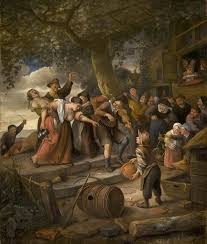
Aristotle and Classical Structure
In Poetics, Aristotle argues a plot must have:
Beginning (Exposition)
Middle (Complication)
End (Resolution)
Classical fiction generally follows this three-part structure.
Grand Narratives with Endings
The Bible:
Genesis → Apocalypse → Last Judgement
Karl Marx’s Das Kapital:
Primitive Society → Class Conflict/Revolution → Utopian Society
These “grand narratives” provide clear ideological and historical closure.
Fin de Siècle (End of the Century)
French term: End of the century (19th to 20th century)
Also known as the Decadence Movement
Major figures:
Oscar Wilde
Aubrey Beardsley
Théophile Gautier
Charles Baudelaire
Key Features:
Emphasis on:
Art for art’s sake
Melodrama, excess, sensationalism
Aestheticism & Symbolism
Mood: Decay, Ennui, Degeneration, Moral ambiguity
Modernism and Postmodernism: Changing Closure
In modern films and literature, “The End” rarely appears.
Writers/filmmakers play with narrative closure:
Endings are often open, ambiguous, or inconclusive.
Reflects:
Complexity of real life
Disruption of traditional storytelling norms
Reader/viewer interpretation over authorial control

What Is Postmodernism?
Postmodernism in literature is a reaction against realism and modernism. It:
Rejects singular truth and grand narratives
Embraces multiplicity, contradiction, and fragmentation
Seeks to challenge authority, including that of language, history, and meaning
Key Characteristics of Postmodern Literature
| Concept | Description |
|---|---|
| Anti-realism | Challenges realism’s claim to truth or authenticity |
| Dialogic closure | Encourages open-endedness, interpretation, and multiple voices |
| Disarticulation & Fracture | Narrative breaks, gaps, disjointed forms to subvert coherence |
| Undecidability | No final or authoritative interpretation—multiple meanings persist |
| Chinese Box Structure | Layered, recursive storytelling (story within story); boundaries blurred |
| Apocryphal History | Rewrites or questions official history through alternative narratives |
| Science Fiction/Fantasy | Explores truth, reality, and identity in speculative frameworks |
Major Theorists and Their Contributions
Jacques Derrida – Deconstruction
Truth is not absolute but constructed.
Language is unstable and contextual.
Logocentrism (faith in reason/word as truth) is interrogated.
Deconstruction: Reading against the grain, showing contradictions within texts.
Fredric Jameson – Postmodernism, or the Cultural Logic of Late Capitalism
Postmodernism reflects consumer capitalism.
Describes the era’s pastiche: imitation without parody or critical edge.
Argues for the blurring of high and low culture.
Emphasizes recycling of styles—art has lost originality.
Linda Hutcheon – The Politics of Postmodernism
Highlights postmodernism’s self-conscious, self-contradictory, self-undermining nature.
Literature becomes a critique of itself, often with ironic distancing.
Intertwines aesthetics with political and cultural critique.
Key Concepts Defined
Pastiche: A stylistic imitation that lacks the satirical bite of parody; a copy of a copy.
Apocryphal History: Reinterpreting history outside the official narrative.
Deconstruction: Reading texts to show how meaning breaks down internally.
Undecidability: When texts refuse closure, resisting definitive interpretation.
Why It Matters
Postmodernism is a lens for critical reading:
Makes us question meaning, identity, and history
Encourages active interpretation—not passive consumption
Offers tools to analyze how media and literature construct reality
Phenomenology in Literary Theory
Definition & Etymology
Phenomenology comes from Greek:
Phainomenon (φαινόμενον) – “that which appears”
Logos (λόγος) – “study” or “reason”
So phenomenology is the study of things as they appear — not as they objectively are, but as they are perceived.
Core Idea
Meaning is not inherent in objects or texts, but is created through perception.
It centers the perceiver — the reader, observer, or conscious subject.
Emphasizes that consciousness shapes meaning.
Thus, subjectivity becomes essential in interpreting literature or experience.
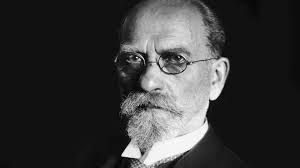
Founder: Edmund Husserl

Edmund Husserl (1859–1938) is the father of phenomenology.
Argued that philosophy should focus on consciousness, not external realities.
Wanted to bracket (set aside) assumptions about the external world and study pure experience.
Saw perception as a constructive act, not passive reception.
Key Shift in Focus
| Traditional View | Phenomenological View |
|---|---|
| Focus on object/text | Focus on perception of object/text |
| Meaning is fixed | Meaning is created through consciousness |
| Reader is secondary | Reader is central to meaning-making |
Major Thinkers Who Expanded Husserl’s Ideas
| Thinker | Contribution |
|---|---|
| Martin Heidegger | Introduced Being and Dasein (being-in-the-world); emphasized interpretation as fundamental |
| Hans-Georg Gadamer | Developed philosophical hermeneutics — meaning arises through dialogue between text and reader |
| Roman Ingarden | Applied phenomenology to literature; emphasized the incompleteness of texts, completed by readers |
| Wolfgang Iser | Co-founded reader-response theory; developed concepts like “implied reader” and gaps in the text |
| Hans Robert Jauss | Introduced horizon of expectations — meaning depends on cultural and historical context of the reader |
Phenomenology in Literary Theory: Reader-Response Criticism
The most visible impact of phenomenology in literary theory is through reader-response criticism.
Reader-response theory holds that:
A text has no meaning without a reader to activate it.
Meaning emerges through a transaction between the text and the consciousness of the reader.
Example Application
A novel like The Remains of the Day by Kazuo Ishiguro doesn’t “mean” something objectively — instead, meaning is constructed differently by readers based on their experiences, perspectives, and emotional responses.
Summary: Why Phenomenology Matters in Literary Theory
Centers consciousness and perception.
Highlights that reading is a dynamic process.
Helps explain how and why different readers interpret texts in different ways.
Forms the foundation for many postmodern and deconstructive approaches to literature.
Hellenistic Age Literary Criticism: Horace & Longinus

Focus Period: 323–31 BC (Post-Alexander to Early Roman Empire)
Historical and Literary ContextThe Hellenistic age began after Alexander the Great’s death (323 BC). Eastern regions became centers of political, commercial, and cultural activity.
Prominent poets:
Callimachus and Philetas (Elegies & Epigrams)
Theocritus (Pastoral poetry)
Philostratus (Stoic influence)
Rise in technical literary criticism, rooted in Stoicism:
True happiness = moral/intellectual perfection.
Introduced six stages of literary learning, from reading aloud to poetry criticism.
Emphasized imagination (phantasia).
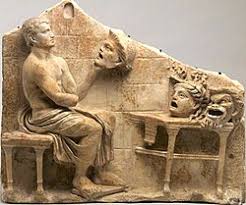
Horace (65–8 BC)
Son of a freed slave; educated in Rome and Athens.
Served under Brutus; later returned to Rome under Emperor Augustus.
Commissioned to write Carmen Saeculare (hymn).
Leading poet of Augustan Rome.
Key Works:
Odes, Epistles, Satires, Epodes, Ars Poetica
Satires: Described as “sermons” or “conversations”, often gentle and witty.
Ars Poetica (19–18 BC): A prescriptive poetic manual, framed as a poetic epistle to the Piso family.
Horace’s Core Critical Ideas:
“Instruct and Delight” — poetry should be useful and pleasurable.
Brevity aids clarity and memory.
Fiction must stay grounded in reality to be effective.
Form and genre should match — e.g., iambic meter for drama.
Emphasizes decorum, tradition + innovation, and emotional restraint.
Despised illiterate playgoers and believed theatre could corrupt morality (similar to Plato and Ovid).
Horatian Ode & Satire
Horatian Ode:
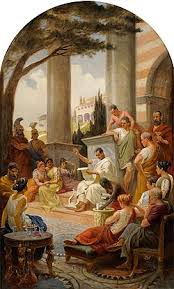
Lyric poetry in 2- or 4-line stanzas.
Influenced by Greek meters (Pindar), but more intimate, reflective.
Tone: Serious, ironic, melancholy, gently humorous.
Admired during Neoclassicism for technical mastery.
Horatian Satire:
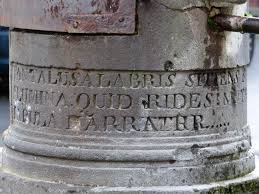
Gentle correction via wit and humor, not harsh invective.
Critiqued Roman society with charm and humanity.
Influenced:
Alexander Pope, John Dryden, Nicolas Boileau
Comedy of Manners, Jane Austen, Cervantes
Longinus – On the Sublime
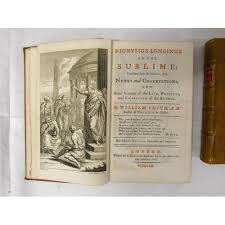
Likely written in 1st century AD (authorship uncertain).
Emerged during:
Second Sophistic (27 BC – 410 AD): Return to classical models.
Neoplatonism: (e.g., Plotinus) Reconciliation of Plato + Aristotle; use of allegory and symbolism.
Definition of Sublime:
OED: Of exceptional quality, beauty, or grandeur.
Longinus: “Consummate excellence and distinction of language that transports the reader beyond themselves.”

Five Sources of the Sublime:
Great thoughts
Strong, inspired emotions
Figures of speech – e.g., polysyndeton (overloading with conjunctions for intensity)
Noble diction
Dignified arrangement of words
Longinus’s Warnings:
Avoid overusing metaphors (no more than 2–3 at a time).
Avoid immoderate emotions (emotion must be overwhelming, not chaotic).
Sublimity is ruined by vulgar diction:
Critique of Herodotus:
“Seethed” = unpoetic
“Wore away” and “unwelcome end” = vulgar, unworthy of tragic grandeur
Philosophy of Sublimity:
Sublime transcends correctness — unlike Horace’s focus on form and taste.
Resembles a spiritual eruption (compared to Mount Etna).
Realism preferred over fantasy:
Iliad = Sublime
Odyssey = Too fabulous
True sublimity is rare — lost in Longinus’s time due to materialism and hedonism.
Horace vs. Longinus —
| Aspect | Horace | Longinus |
|---|---|---|
| Goal of Poetry | Instruct & Delight | Elevate & Transport |
| Emotion | Measured, appropriate | Overwhelming, awe-inspiring |
| Diction | Clear, decorous, correct | Noble, elevated, never vulgar |
| Style Concern | Rules, tradition, genre-suitability | Grandeur, genius, originality |
| Failure to Avoid | Excess imitation, bad taste | Vulgarity, excess, flat emotion |
| Legacy | Neoclassicism, satire | Romanticism, aesthetics of genius |
Summary: Classical Literary Theory
Horace: Art as Instruction and Delight
Horace believed the poet’s goal is to instruct and delight.
Brevity is crucial for instruction, avoiding superfluous words that overwhelm the mind.
Fiction meant to entertain should still stay close to reality.
The poet who combines the useful and the pleasurable is the most successful.
Horace emphasized that poetry must affect the reader, guiding their emotions and morals.
His impact on literary criticism is second only to Aristotle, with influence noted by Dante and others.
Longinus: On the Sublime
Longinus, though of uncertain authorship (1st century AD), emphasized sublimity in expression.
Sublime writing stems from powerful emotions, noble diction, and avoiding vulgar language.
Word choice deeply affects tone; even one ignoble word can ruin an otherwise majestic passage.
Longinus believed great literature elevates the soul and that the aesthetic and the moral are linked.
Classical Athens: Foundations of Literary Criticism
Flourished between 507–400 BC as a democratic city-state.
Three major developments influencing literature:
The rise of the polis (city-state) and public education
Political and ideological conflict with Sparta
Panhellenism — which led to literary canon formation and standards of imitation (mimesis)
From Homer onwards, poetry held a public, educational, and moral function.
The chorus in Greek drama represented the community, reinforcing literature’s political role.
Aristophanes’ The Frogs (405 BC)
A comic play that critiques poets Aeschylus vs. Euripides.
Aeschylus = traditional values; Euripides = newer democratic, secular voice.
It highlights that poetry was a tool of ethical education in ancient Greece.
Suggests a literary-critical consciousness was already active in comedy.
Plato: Critique of Poetry
Plato (428–347 BC), student of Socrates, founder of the Academy, used dialogues to explore ideas.
Believed in Forms (ideal realities) like justice, beauty, and truth — only accessible through reason, not the senses.
Theory of Forms
The empirical world is deceptive; real knowledge comes only through reason and understanding the unchanging Forms.
Art and poetry imitate the world, which itself is an imitation of the Forms — thus, poetry is a copy of a copy and doubly false.
Poetry in The Republic
Plato argues in The Republic (esp. Book III and X) that:
Poetry can corrupt moral behavior, especially in the young.
Poets model improper behavior — like cowardice, drunkenness, etc.
Only poetry that encourages virtue, bravery, and civic order should be allowed.
Most poets should be banned from the ideal republic.
Drama is especially dangerous due to imitation; epic is more acceptable.
Genres of Poetry According to Plato
Narrative – the poet speaks in his own voice
Imitation – tragedy and comedy (more dangerous)
Epic – a mixture of both
Plato’s Allegory of the Cave
People are like prisoners in a cave, mistaking shadows for reality.
Poetry, being imitation, offers shadows rather than truth.
The allegory illustrates how representation can be misleading, reinforcing Plato’s distrust of art.
Key Concepts Introduced
Mimesis (Imitation) — central to Greek literary thought and criticism.
Representation — how literature mirrors or distorts reality.
Art and Ethics — ancient critics believed literature had a moral responsibility.
Rationality vs. Inspiration — contrast between Socratic reason and the irrational, divine inspiration of poets.
Classical Theory – Aristotle and Poetics
Core Focus:
Key Thinker: Aristotle (384–322 BCE)
Primary Text: Poetics
Key Concepts: Mimesis, Catharsis, Tragedy, Plot, Character, Hamartia, Peripeteia, Anagnorisis
Mimesis (Imitation / Representation)
Mimesis is a central aesthetic and philosophical term in classical theory.
For Plato, mimesis was negative — art is a shadow of reality, far from the truth.
Aristotle refuted Plato, defending literature as a medium to represent universal and eternal truths.
Humans are naturally imitative; imitation is how we learn and derive pleasure.
Art imitates life through different forms, mediums, and moral behaviors.
Example: Shakespeare’s Hamlet echoes mimesis — “to hold, as ’twere, the mirror up to nature…”
Catharsis (Emotional Purification)
Borrowed from medical terminology; refers to cleansing or purgation of emotions.
In tragedy, the arousal of pity and fear leads to catharsis in the audience.
Tragedy moves the audience emotionally and morally, leading to emotional release and clarity.
It’s not a moral lesson, but a psychological and aesthetic experience.
Aristotle’s Definition of Tragedy
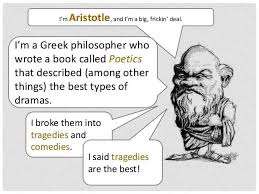
“Tragedy, then, is an imitation of an action that is serious, complete, and of a certain magnitude…”
Must be written in embellished language, presented in dramatic (not narrative) form.
Aim: to arouse pity and fear, leading to catharsis.
Six elements of tragedy:
Plot, Character, Thought, Diction, Melody, Spectacle.
Structure of Plot
Most important element of tragedy.
Must have unity: beginning → middle → end.
Based on causality (cause-effect logic).
A good plot includes:
Peripeteia: Reversal of fortune
Anagnorisis: Recognition or discovery of truth
Pathos: Suffering
Sophocles’ Oedipus Rex is Aristotle’s ideal tragic plot — tight structure, intense emotional arc.
The Ideal Tragic Hero
A man of eminence and stature (e.g., king, prince).
Must be essentially good, morally upright, and consistent in character.
Cannot be a villain or of low social standing (common man as tragic hero is a modern idea).
Tragic downfall comes not from evil, but from hamartia (tragic flaw or error in judgment).
Examples of Hamartia:
Oedipus: impulsive, ignorant of truth
Antigone: defiant of state laws
Hamlet: procrastination
Othello: impulsiveness, jealousy
Legacy and Influence
Poetics remains the most influential treatise in literary criticism.
Elevated poetry as a form of knowledge, akin to philosophy.
Shifted poetry’s purpose from ethics to aesthetics.
Introduced universal principles for analyzing drama and literature.
Classical Literary Theory: Plato, Aristotle, and the Greek Context
In Classical Athens (507–400 BC), a democratic city-state that laid the intellectual foundation for Western literature, politics, and aesthetics. Three major historical and cultural developments shaped the evolution of Greek literature and criticism:
The Evolution of the Polis (City-State):
Literature—especially drama—reflected the collective values of the polis. The Greek chorus, for instance, often represented the voice of the community, underscoring the civic function of art.
The Ideological Conflict Between Athens and Sparta:
The political and philosophical rivalry between these city-states influenced thinkers like Plato, whose literary theories respond to the tension between democratic and oligarchic ideals.
Panhellenism:
A cultural movement that promoted unity among Greek city-states by standardizing literary ideals and establishing a canon of “classics.” This period saw the rise of mimesis (imitation) as a central concept in both literature and criticism.
Plato’s Literary Philosophy
Plato (428–347 BC), a student of Socrates, used dialogue and dialectical reasoning to pursue philosophical truth. His key contribution to literary theory lies in his Theory of Forms—the idea that absolute concepts like justice or beauty exist beyond the physical world.
According to Plato:
The empirical world is unreliable; true knowledge can only be attained through reason and an understanding of the eternal Forms.
Art and poetry are imitations of the physical world, which is itself an imitation of the ideal realm—making them a “copy of a copy.”
Because of this double remove from truth, poetry lacks epistemic value and can distort moral and civic behavior.
In The Republic (c. 360 BC), Plato outlines his critique of poetry and the arts:
Poets who depict gods in conflict or heroes in grief may encourage similar behaviors in citizens and should therefore be censored or excluded from the ideal state.
Literature must have a moral and educational function; it should shape character, instill virtue, and support civic harmony—not merely offer aesthetic pleasure.
Plato’s Allegory of the Cave illustrates this philosophy of representation: people mistake shadows (appearances) for reality, just as audiences mistake artistic imitations for truth. True understanding comes only by grasping the Forms beyond these illusions.
Theatre and the Question of Mimesis
By the late 5th century BC, theatre had become the dominant literary medium, blending elements of epic, lyric, and drama. While Socrates viewed poetic inspiration as irrational, Plato insisted that literature must be guided by reason and ethical responsibility.
This tension is captured in Aristophanes’ play The Frogs (405 BC), which stages a comic contest between two playwrights:
Aeschylus, representing traditional moral values
Euripides, associated with newer, more secular and democratic ideals
The play underscores the civic importance of poetry in shaping cultural values, education, and public life—despite Plato’s skepticism
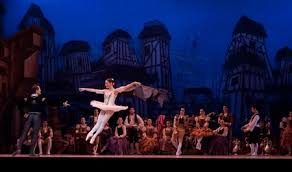
Aristotle’s Key Concepts in Literary Theory
Aristotle redefined literature, especially poetry and tragedy, as valuable modes of understanding universal truths, distinct from Plato’s moral suspicion of artistic imitation.
Mimesis (Imitation/Representation)
Unlike Plato, who viewed mimesis as a distortion of truth, Aristotle saw it as natural and fundamental to human learning.
Humans are the most imitative of creatures, he argued, and they derive pleasure and knowledge from representation.
Literature, especially tragedy, imitates actions and emotions, allowing audiences to grasp higher, often eternal, truths—not just historical specifics.
Catharsis (Emotional Purification)
One of Aristotle’s most influential ideas, catharsis refers to the emotional effect tragedy has on its audience.
Through feelings of pity and fear, viewers experience a cleansing or purification, leading to emotional clarity and moral insight.
The Structure of Tragedy
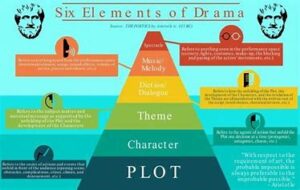
Aristotle identified six elements of tragedy:
Plot (mythos) – The most important element; it must be unified, causal, and complete (with a beginning, middle, and end).
Character (ethos) – The protagonist should be noble, morally good, and consistent, though flawed.
Thought (dianoia) – The ideas or themes expressed in the work.
Diction (lexis) – Language and dialogue used to express the thought.
Melody (melos) – Musical elements, often present through the chorus.
Spectacle (opsis) – The visual dimension of performance, though considered least important.
The Ideal Tragic Hero
Aristotle’s concept of the tragic hero is central to his theory:
A person of high status or eminence (e.g., kings, nobles).
Essentially good and morally upright.
Possesses a tragic flaw (hamartia)—a judgmental error or character defect that leads to downfall.
Evokes pity and fear through his/her fate, which is often undeserved but self-inflicted.
Examples include:
Oedipus (impulsiveness and ignorance)
Antigone (defiance of authority)
Hamlet (procrastination)
Othello (jealousy and impulsiveness)
Peripeteia and Anagnorisis
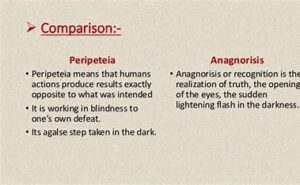
Aristotle further defined:
Peripeteia – A reversal of fortune, caused by the hero’s error.
Anagnorisis – A moment of recognition or realization about one’s own role in the tragic outcome.
These elements intensify the emotional impact of the plot and contribute to catharsis.
Aristotle’s Legacy in Literary Criticism
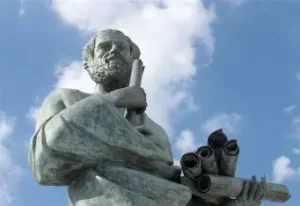
Aristotle’s Poetics is widely regarded as the most influential treatise in the history of literary theory. His ideas marked a shift from seeing poetry as moral instruction to understanding it as a form of aesthetic experience grounded in universal truths.
Unlike history, which recounts what happened, poetry deals with what could happen—what is probable and universal.
His systematic approach to plot, character, and structure continues to inform modern literary theory, drama, narrative studies, and film.
Early Modern Literary Theory: Humanism, Poetry, and the Defence of Art
The Early Modern Period—spanning the 15th to early 17th centuries—marks a vital transformation in Western thought, driven by Renaissance humanism, the rediscovery of classical texts, and the emergence of modern literary criticism. Poetry and rhetoric gained renewed prestige during this period as tools for ethical education, intellectual reflection, and emotional persuasion.
Humanism and the Renaissance Imagination
At the heart of this transformation was humanism, a philosophical movement rooted in the studia humanitatis—grammar, rhetoric, history, poetry, and moral philosophy. Renaissance thinkers believed in:
The inherent dignity and potential of humans
The value of free inquiry and secular education
The emulation of classical Greek and Roman literature
Humanism emphasized that literature could shape virtue, stir imagination, and move audiences emotionally and morally. Art was no longer seen merely as divine inspiration or religious expression but as a human act of creation and imitation (mimesis).
The School of Abuse vs. An Apology for Poetry
A major flashpoint in early literary theory emerged with Stephen Gosson’s 1579 pamphlet, The School of Abuse, which criticized poets, musicians, and actors as “caterpillars of a commonwealth.” Echoing Plato’s suspicion of poetry, Gosson condemned the arts as morally corrupt and socially dangerous.
Ironically, he dedicated this attack to Philip Sidney—a celebrated poet, courtier, and scholar. In response, Sidney penned one of the most influential literary defenses in English: An Apology for Poetry (also published as The Defence of Poesy).
Philip Sidney’s Defence of Poetry: Key Arguments
Sidney’s Apology, written around 1581 and published posthumously in 1595, argues passionately that poetry is the origin, foundation, and summit of all learning. His central claims include:
Poetry is the oldest and most universal form of knowledge
“Poetry is of all human learning’s the most ancient… no learned nation doth despise it, nor barbarous nation is without it.”
Poetry predates other sciences and disciplines. It speaks across cultures and time, engaging both the educated and the “barbarous.”
The Poet is a Maker
Drawing on the Greek term poiein (“to make”), Sidney praises the poet not as a mere imitator of the world, but a creative force who shapes new worlds from imagination:
“The poet only bringeth his own stuff… and maketh matter for a conceit.”
Where other disciplines rely on the external world, the poet creates independently—elevating poetry above the empirical sciences.
Poetry Teaches and Delights
Sidney follows the classical Horatian ideal: poetry’s goal is both instruction and pleasure. He argues that poetry:
Inspires virtue through allegory and metaphor
Moves the soul through emotional and rhetorical appeal
Conveys universal truths more vividly than history or philosophy
Poets do not lie
In answer to Gosson’s charge that poets are liars, Sidney responds:
“The poet nothing affirms, and therefore never lieth.”
Poetry does not claim factual accuracy; it presents imagined truths in symbolic and rhetorical form—thus its value lies in moral resonance, not literal truth.
A Moral Art
Poetry’s moral function makes it superior to disciplines like history, which recounts events without inspiring virtue. Great poets do not corrupt, but guide the reader toward goodness.
Poetry, Rhetoric, and Renaissance Style
During the Renaissance, poetry was deeply linked to rhetoric, the art of persuasion. Writers like Sidney saw themselves as orators as well as artists, aiming to move audiences both intellectually and emotionally. This period witnessed a shift:
Away from medieval metrical forms
Toward classically inspired structure, emotional persuasion, and aesthetic grace
Legacy of Sidney and the Renaissance Critics
Sidney’s Apology stands alongside Aristotle’s Poetics and Horace’s Ars Poetica as a foundational text in literary criticism. It defines poetry not just as a source of beauty or pleasure but as a moral, philosophical, and civic force. It also laid groundwork for future literary theory by asserting:
The value of imaginative literature
The ethical role of the artist
The power of words to shape thought and virtue
The Early Modern Period witnessed the rebirth of poetry as a rational, moral, and imaginative art. While critics like Gosson attacked poetry’s social role, defenders like Sidney established its truth-bearing power, creative dignity, and universal value. His Apology for Poetry remains a timeless manifesto for why literature matters.
Classical Foundations: Plato, Aristotle, and Mimesis
Literary theory begins with the Greeks. Plato’s approach to literature is rooted in philosophy and ethics. He introduces the concept of mimesis (imitation), arguing that poets imitate reality and thus are twice removed from the truth. He is skeptical of poetry’s moral value, fearing its emotional sway over reason.
In contrast, Aristotle defends poetry, especially tragedy, in his Poetics. He regards literature as a natural human activity, valuable for its emotional and intellectual effects. Mimesis, for Aristotle, is a means of learning and catharsis. He emphasizes unity of action, plot structure, and character development, setting the foundation for dramatic theory.
Renaissance Humanism: The Rebirth of Poetic Authority
During the Renaissance, thinkers and writers re-engaged with classical texts but reinterpreted them through the lens of humanism and rhetoric.
Philip Sidney, in An Apology for Poetry, famously defends the moral and imaginative power of poetry. He asserts that poetry is the “most ancient” form of learning and not bound by empirical truth, but rather by creative construction and moral intent. Unlike history or philosophy, the poet “brings his own stuff” and transforms it into new meaning.
Poetry during this time was treated as a persuasive, rhetorical art designed to move the audience — merging beauty with moral instruction, echoing Cicero’s ideals of eloquence and virtue.
Neoclassicism: Order, Reason, and Elegance
Emerging in the 17th and 18th centuries, Neoclassicism looked back to classical antiquity — especially Aristotle and Horace — but interpreted through the lens of Enlightenment values: rationality, decorum, moderation, and adherence to nature.
Italian theorists like Castelvetro emphasized Aristotle’s unities of time, place, and action.
French critics institutionalized literary taste with the founding of the Académie Française in 1634.
Nicolas Boileau (Zola), in L’Art Poétique, formalized four principles of neoclassical literature: Nature, Reason, Decorum, and Unity.
In England, Alexander Pope was a leading figure. In An Essay on Criticism (1711), he stresses:
“First follow nature and your judgment frame / By her just standard, which is still the same.”
Pope and Dryden perfected the heroic couplet — a 10-syllable iambic form ideally suited for satire, drama, and moral instruction. Their verse embodied clarity, control, and intellectual rigor, rejecting sentimentality for balanced expression.
Cultural Context and Literary Practice
The coffeehouse culture of 18th-century London became a hub for literary discussion.
Neoclassicism favored urban themes, reflecting refined social life, over the emotional naturalism that would emerge in Romanticism.
Writers often sought patronage, positioning themselves within elite circles and aligning with classical ideals to elevate their art.
Despite admiration for Homer and other ancients, neoclassical writers recognized the difficulty of true imitation. They instead focused on lesser genres — satire, prose, and comedy of manners — executed with stylistic precision.
Neoclassical Literary Theory
Neoclassicism, flourishing in the 18th century—often called the Age of Reason—was a literary and philosophical movement that upheld order, rationality, and adherence to classical ideals. Deeply influenced by Greek and Roman traditions, this era emphasized restraint, decorum, and intellectual discipline in literary expression.
Key Figures
Notable contributors to this movement include John Dryden, Alexander Pope, Jonathan Swift, Joseph Addison, Richard Steele, Samuel Johnson, and Lord Chesterfield. These writers were deeply committed to academic rigor, the study of classical models, and a respect for established norms.
Core Principles
Imitation: Central to neoclassical theory was the idea of mimesis—imitating nature and human action. But “nature” here meant a universal moral order, not simply the physical world.
Decorum: Writers were expected to match style, character, and content appropriately, maintaining harmony and propriety in all literary forms. This applied to language, structure, and genre use.
Reason Over Emotion: Emotion was not rejected but subordinated to reason. Clarity, logic, and balance were prized over excessive passion or personal subjectivity.
Impersonality and Universality: Literature should transcend the personal and subjective, instead expressing timeless truths about human nature and society.
Classical Forms: Instead of innovating new genres, neoclassicists often refined traditional literary forms—epic, satire, ode, elegy, tragedy, and comedy.
Stylistic Features
Language was polished, refined, and standardized.
Form was preeminent; writers favored structured poetic forms and valued harmony, proportion, and restraint.
Satire became a dominant mode, used to correct folly and vice with wit and moral insight.
Representative Works & Criticism
Dryden’s An Essay on Dramatic Poesy evaluated French vs. English drama, stressing Aristotelian unity and criticizing Shakespeare’s dramatic liberties.
Pope’s An Essay on Criticism and Epistle to Dr Arbuthnot blended poetic brilliance with moral and aesthetic judgment, showcasing the power of satire and wit.
Dr. Johnson emphasized the importance of a refined and universal vocabulary, aiming to elevate English prose and poetry beyond both colloquialism and technical jargon.
The Human Focus
Neoclassicists explored man in society, prioritizing universal human experiences over individual introspection. In Pope’s An Essay on Man, the famous line “Know then thyself” captures this preoccupation with human nature, morality, and rational understanding.
Early Romanticism and the Enlightenment Legacy
Historical Context (1760–1860)
This 100-year period was marked by two major events:
The French Revolution – introduced political upheaval and the questioning of authority.
The Industrial Revolution – transformed economies, work, and individual value.
Key features of the era included:
Emphasis on rationality, empiricism, and pragmatism.
Rise of political liberalism, individual utility, and belief in science and progress.
The Enlightenment (17th–18th Century)

A major intellectual and cultural movement in Europe that emphasized:
Reason and progress
Rejection of tradition, superstition, and clerical authority
Human rights, equality, freedom of thought, and religious tolerance
Scientific breakthroughs (e.g., Newton, Priestley) and political theory (e.g., Hobbes, Locke)
Key Enlightenment Figures:
England: William Godwin, John Locke, Francis Bacon
France: Voltaire, Diderot, Descartes
Germany: Leibniz, Kant
Netherlands: Spinoza
Voltaire’s Candide (1759) mocked rational justifications for war and inequality. Political philosophers like Hobbes (pessimistic view of human nature) and Locke (champion of liberalism) shaped modern democracy. In America, Jefferson and Franklin adopted Enlightenment ideals to draft the Declaration of Independence.

Women in the Enlightenment
Mary Wollstonecraft, a feminist and political radical, defended the French Revolution and demanded equal education and rights for women in her works:
A Vindication of the Rights of Men (1790)
A Vindication of the Rights of Woman (1792)
Criticism of the Enlightenment
Criticized for neglecting tradition, emotion, and subjective experience.
Adorno and Horkheimer (Dialectic of Enlightenment, 1940s) argued that overemphasis on reason led to dehumanization.
Immanuel Kant’s Contribution
Key Questions in Kant’s Philosophy:
What can I know?
What ought I to do?
What may I hope?
Kant tried to bridge reason and experience and defined Enlightenment as “release from self-incurred immaturity” i.e., the ability to think independently.
Major Works:
Critique of Pure Reason (1781) – Explores the limits and powers of human knowledge. He challenged a priori knowledge (knowledge without experience), arguing we cannot know the world purely through reason.
Critique of Judgment (1790) – Focuses on aesthetics, arguing that:
Aesthetic judgments are not cognitive but arise from the form of objects and their harmony with our imagination and understanding.
Introduces key concepts like:
Purposiveness: The perceived harmony between nature and our mental faculties.
Taste: The ability to judge based on this harmony.
Sublime: Unlike beauty (bounded form), the sublime involves boundlessness, evoking awe, admiration, and respect rather than charm.
Kant’s Legacy and Influence
Romanticism absorbed Kant’s ideas of imagination, aesthetic freedom, and the non-utilitarian value of art.
Influenced major thinkers and writers:
German Romantics: Goethe, Schiller
English Romantics: Coleridge, Edgar Allan Poe
Victorian Critics: Matthew Arnold
Modern/Postmodern Theorists: New Critics, Jean-François Lyotard
Kant emphasized the gap between the natural (sensory) world and the world of freedom (supersensible) — a philosophical tension central to Romantic and post-Enlightenment thought.
English and American Romanticism – Wordsworth, Coleridge, and Hazlitt
Historical & Intellectual Background
Timeframe of English Romanticism: 1789 (French Revolution) to 1832 (death of Sir Walter Scott)
A reaction against Neoclassicism, which emphasized decorum, order, and imitation.
Romanticism instead emphasized:
Spontaneity
Individual experience
Imagination
Emotional depth
Connection with nature
Dignity of the common man
Influence of the French Revolution
Ideals of liberty, equality, fraternity deeply influenced early Romantics.
Rousseau’s ideas (“Man is born free but everywhere in chains”) echoed in Romantic thought.
Disillusionment with the Revolution’s violence led poets like Wordsworth and Coleridge to salvage its original humanistic ideals through literature.
William Wordsworth (1770–1850)

Co-authored Lyrical Ballads (1798) with Coleridge — a turning point in English poetry.
Advocated for:
Simple, everyday language (rejection of “gaudiness and inane phraseology”)
Poetry drawn from “humble and rustic life”
Emphasis on emotional truth and natural speech
Belief that common people, women, and children deserve a central place in poetry
Definition of a Poet:
“A man speaking to men” – bridging the gap between poetic genius and reader.
Goal of Lyrical Ballads:
To make ordinary things appear extraordinary through the colouring of imagination.
Samuel Taylor Coleridge (1772–1834)

Major theoretical work: Biographia Literaria (1817)
Distinguished between Fancy and Imagination:
Fancy: Mechanical, dependent on memory, deals with fixities and definites.
Imagination:
Primary: Vital and unifying power
Secondary: Creative and synthetic, reconciles opposites (e.g., the general and the concrete, reason and emotion)
Source of true poetic genius
Key Terms in Coleridge’s Thought:
Synthetic power: Unifying opposites into an organic whole
Poetic genius: Linked to depth of imagination
Shakespeare: His model of the ideal genius — could become all things, yet remain himself
Example: “Kubla Khan” (1797)
A dream-inspired poem, incomplete yet visionary
Demonstrates Coleridge’s belief in poetry as imaginative transcendence, not mere realism
“He on honey-dew hath fed / And drunk the milk of paradise”
William Hazlitt (1778–1831)

Multifaceted: poet, painter, historian, critic
Influenced directly by Coleridge and the creation of Lyrical Ballads
Core Beliefs:
Imagination transforms reality through emotion and intuition
Advocated feeling over reason, aligning with Romantic ideals
In On Genius and Common Sense, emphasized:
“You decide from feeling, not from reason.”
Important Works:
An Essay on the Principles of Human Action (1805)
The Spirit of the Age (1825)
The Life of Napoleon (1830)
Key Critical Ideas:
Style and sincerity matter more than convention
Courage to say what one feels is essential for a true poet
There should be no gap between the man and the poet.
Together, Wordsworth, Coleridge, and Hazlitt reshaped literary criticism and poetic creation by:
Celebrating emotion, imagination, and personal experience
Redefining the role of the poet and the purpose of poetry
Introducing the common man and natural language into literary prestige
Emphasizing sincerity, subjectivity, and poetry as a transformative force
Their legacy laid the philosophical and aesthetic groundwork for Transcendentalism in America and later literary movements worldwide.
American Romanticism
(The American Renaissance / Age of Transcendentalism)
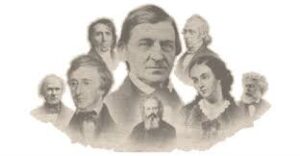
Key Figures
Ralph Waldo Emerson
Henry David Thoreau
Walt Whitman
Nathaniel Hawthorne
Herman Melville
Edgar Allan Poe
Core Ideas and Themes
American Romanticism was a revolt against the Age of Reason, emphasizing:
Imagination, Individualism, Spiritual intuition, Nature as a refuge, Emotional intensity, Nonconformity, Subjectivity.
In contrast to the Age of Reason, which valued:
Rationality, Order, Control, Conformity, Mechanism.
Romanticism celebrated:
Spontaneity, Organic growth, Expression of individuality, The unique and eccentric.
Context and Background
The American Revolution and works like Thomas Paine’s Common Sense (1776) contributed to a new national identity.
American Romanticism tied individual identity to national identity – a “poem waiting to be written.”
Major Writers and Works
Walt Whitman (1819–1892)
Works: Leaves of Grass, Song of Myself
Style:
Pioneer of free verse
Used colloquial language, realism, and inclusivity
Themes: Democracy, nature, equality (e.g., “What is the grass?”)
Celebrated individual identity and universal human connection
Ralph Waldo Emerson (1803–1882)
Major Essays: Nature, Self-Reliance, The American Scholar
Key Ideas:
Return to Nature
Childlike innocence reveals truth
Individualism and nonconformity are central
Mind and matter are linked by divine will
Self-Reliance: “Whoso would be a man must be a nonconformist”
Rejected European tradition, unlike T. S. Eliot who embraced it
Henry David Thoreau (1817–1862)
Major Works: Walden, Civil Disobedience (1849)
Themes:
Simplicity, solitude, spiritual unity with nature
Strong influence on Gandhi’s political philosophy
Quote: “That government is best which governs not at all”
Nathaniel Hawthorne (1804–1864)
Work: The Scarlet Letter
Themes:Sin, guilt, redemption
Influenced by Coleridge’s imagination and Emerson’s ideas
Critic of industrialization and commercialism
Psychological and symbolic fiction rooted in American settings
Edgar Allan Poe (1809–1849)
Works: The Fall of the House of Usher, The Raven, Annabel Lee, The Tell-Tale Heart
Critical Essays:
The Philosophy of Composition (1846)
The Poetic Principle (1850)
Key Points:
Opposed allegory (unlike Hawthorne)
Focused on emotional unity, mood, and aesthetics over morality
“The death of a beautiful woman” = most poetic topic
Influenced Baudelaire and the French Symbolists
Herman Melville (1819–1891)
Work: Moby-Dick
Themes:
Deeply subjective and mythic portrayal of characters (e.g., Ahab)
Ahab as a symbol of obsession and grandeur
Romantic focus on the eccentric individual
“He looked like a man cut away from the stake…” – Melville’s poetic and symbolic description of Ahab.
Emily Dickinson
Known for:
Extreme individualism
Isolation and resistance to publication
Spontaneous, lyrical, inward-turning poetry
Core Romantic Characteristics
Natural goodness of humans
Faith in emotions over reason
Sincerity, spontaneity, deep self-analysis
Democratic values and celebration of freedom
Emphasis on what is unique in a person over the typical or representative
Critical Perspective: Harold Bloom
A major modern critic defending Romantic tradition
Key works:
Shelley’s Mythmaking
The Visionary Company
Blake’s Apocalypse
The Anxiety of Influence (1973):
Argues that strong poets feel burdened by their great predecessors
Contrasts with Eliot’s idea of tradition as empowering
Romantic poetry seen as a quest for originality and self-expression
Recommended Reading List
M. H. Abrams – The Mirror and the Lamp, Natural Supernaturalism
Harold Bloom – The Visionary Company, Romanticism and Consciousness, The Anxiety of Influence
Douglas Bush – Mythology and the Romantic Tradition in English Poetry
Marilyn Butler – Romantics, Rebels and Reactionaries
Marshal Brown – Cambridge History of Literary Criticism, Vol. 5
Paul de Man – The Rhetoric of Romanticism
Hegel, Schiller, Stael & the Rise of Romanticism
Hegel’s Philosophy and Romanticism
Georg Wilhelm Friedrich Hegel (1770–1831) was a major German philosopher whose work bridges the Enlightenment and Romanticism. While not a Romantic in the conventional sense, Hegel was deeply influenced by Romantic ideas and contributed significantly to aesthetic theory.
Influence of the French Revolution: Hegel viewed the revolution as an embodiment of the bourgeois class’s struggle for supremacy and political freedom. His system reflects the revolutionary spirit of Enlightenment ideals, especially the emphasis on reason but also incorporates Romantic qualities such as the reconciliation of opposites.
Major Works:
Phenomenology of Spirit (1807): Argues that after the collapse of heroic culture, individuals seek meaning beyond conquest and domination. Slaves, by renouncing heroic individualism, create stable social orders through collective identity rooted in labor and form-making.
Lectures on Aesthetics: Hegel outlines three stages of art:
Symbolic: Spiritual content is unclear and symbolically linked to natural forms (e.g., pyramids).
Classical: Harmony between spirit and matter; seen in idealized Greek art.
Romantic: Subjective and universal; transcends mere appearance and represents spiritual truth.
Key Philosophical Ideas:
Imagination and Spirit: Hegel sees art and beauty as tools to reconcile the sensory and the intellectual.
Dialectic Method: A core part of Hegel’s system, progressing from substance to subject, showing how thought is dynamic and reality is a rational, historical progression.
Art’s Role: Art is not merely for pleasure, morality, or instruction; it expresses spiritual truth and helps us perceive reality more deeply. Hence, artistic reality is “higher” than ordinary reality.
Hierarchy of Expression: For Hegel, religion and philosophy are higher modes of expressing truth than art.
Influence:
Profoundly influenced Marx, Freud, and poststructuralist thinkers like Derrida and Lacan.
Shaped the Frankfurt School (Adorno, Benjamin, Horkheimer, Marcuse).
Friedrich Schiller and Aesthetic Education
Friedrich Schiller (1759–1805), German dramatist and philosopher, played a crucial role in the intellectual foundation of Romanticism.
Key Ideas:
Aesthetic Education of Man: Advocated that art should educate and elevate humanity. He saw modern man as fragmented due to specialization and alienated from wholeness, unlike the Greeks, who represented a harmony between reason and imagination.
Naive and Sentimental Poetry: Distinguished between “naive” poets (like the Greeks) and “sentimental” poets (modern, self-aware poets). He suggested that modern art should reconcile sense and intellect, nature and reason.
Critique of Modernity:
Alienation: Modern humans are “reduced to fragments,” defined not by holistic humanity but by occupational roles or specialized knowledge.
Advocated for a move away from utilitarianism toward an ideal of beautiful humanity via art.
Instead of yearning for Arcadia (idealized past), Schiller proposed striving for Elysium, a harmonious future where sentiment and reason are fused.
Influence on Romanticism:
Inspired the German Romantics by calling for a self-conscious and ideal-driven artistry.
Anticipated Hegel and Marx in his thinking about estrangement and alienation.
Germaine de Staël and the French Contribution
Germaine de Staël (1766–1817) was a French writer and intellectual who advocated for Romanticism while maintaining Enlightenment values.
Literary Criticism:
In her work On Literature Considered in its Relation to Social Institutions (1800), she explored the societal obstacles for women writers and promoted freedom and education for women.
Ideas and Influence:
Emphasized the connection between literature and social conditions.
Advocated artistic freedom, originality, and emotional expressiveness — key Romantic values.
Opposed Napoleon’s censorship and was exiled from France.
Bridge Between Movements:
Though rooted in Enlightenment, her work helped transition European thought into Romanticism.
Anticipated realism while defending Romantic ideals.
Early English Romanticism
The transition to English Romanticism was influenced by German thought, including Kant, Fichte, Hegel, and Schiller.
Early Figures:
Thomas Gray, Oliver Goldsmith, Robert Burns: Early poets showing Romantic sensibility.
William Blake: Mystical, visionary poet who saw the world as full of contradictions and attempted their resolution through his personal mythos.
Wordsworth and Coleridge:
Heavily influenced by Kant’s ideas of imagination and the moral self.
Developed the concept of poetic imagination as central to Romantic expression, a topic to be elaborated in future classes.
Overarching Themes Across the Thinkers
Art as Truth: For Hegel and Schiller, art is a means of understanding reality and elevating the human spirit.
Imagination: Following Kant, imagination becomes central to Romantic thought, a synthetic and creative faculty.
Alienation and Wholeness: Schiller’s idea that modern man is fragmented due to rationalism and industrialism becomes foundational for Romantic quests for unity and authenticity.
Freedom and Subjectivity: Romantics across Europe prioritize individual freedom, emotional expression, and subjective experience over Enlightenment rationalism.
Social Context: Writers like Madame de Staël foregrounded the social and institutional constraints on creativity, especially for marginalized groups like women.
Realism
Definition & Purpose: Realism is an artistic and literary movement that emphasizes an objective, honest depiction of life, especially the everyday and the mundane. It avoids idealization and aims to mirror real-life experiences as truthfully as possible.
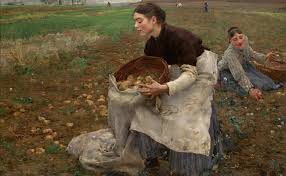
Time Period: Dominated mid-to-late 19th century (1850s–1860s), especially after the American Civil War.
Key Characteristics:
Focus on the middle and lower classes.
Emphasis on local color and regionalism, realistic portrayal of speech, settings, and dialects.
Preference for common people over heroic or symbolic characters.
Rejects romantic idealism; instead, it seeks a truthful treatment of subject matter.
Major Realists:
Daniel Defoe, Henry Fielding, Jane Austen, Balzac, George Eliot, Tolstoy, Henry James, William Dean Howells, and Sinclair Lewis.
Literary Style: Often reportorial in tone, giving readers the illusion of ordinary experience.
Realism vs. Naturalism
Realism is less bleak, more balanced, and less deterministic than naturalism.
Naturalism explores the darker, more pessimistic sides of human nature and is often focused on how environment and heredity shape character.
Realism documents both the good and the bad without moralizing or offering dramatic resolutions.
Aestheticism
Definition: A late 19th-century European movement asserting that art exists for its own sake (“art for art’s sake”).
Key Thinker: Immanuel Kant, aesthetic experience involves disinterested contemplation; art pleases by virtue of itself, not for moral or practical reasons.
Major Figures: Charles Baudelaire (Fleur du Mal, 1857), influenced French symbolism and advocated for artistic autonomy.
Core Belief: Art’s supreme value lies in its self-sufficiency, form, and sensuous appeal rather than utility or realism.
Symbolism
Closely linked with aestheticism and often associated with Baudelaire and his successors (e.g., Rimbaud, Valéry, Mallarmé).
Belief that elements like color, perfume, number, form carry spiritual significance and are interconnected in ways that evoke deeper truths beyond the visible.
Touchstone Method:
Not yet explicitly explained, but likely to reference Matthew Arnold’s method of comparing literary works to established “touchstones” of excellence.
Objective Correlative:
An Eliotian concept using a set of objects, situations, or events to evoke a particular emotion in the reader.
Dissociation of Sensibility:
Another concept by T.S. Eliot, likely to be addressed in later posts, refers to the historical split between thought and feeling in poetry post-Metaphysical era.
Aestheticism in Victorian England
Walter Pater was the central figure who introduced French aestheticism to Victorian England, advocating the supreme value of beauty and art for art’s sake.
Emphasized autonomy of art the belief that art exists independently of moral, political, or utilitarian functions.
His influence extended to modernists like W.B. Yeats, T.S. Eliot, and literary movements like New Criticism.
Oscar Wilde and Aesthetic Theory
Wilde, though primarily known for his plays and novel The Picture of Dorian Gray, was a significant philosopher of aesthetics.
Key idea: “It is the spectator, and not life, that art really mirrors” a radical assertion of subjective perception in art.
Major works of criticism:
The Decay of Lying (1889)
The Critic as Artist (1890)
Wilde believed in contradiction as truth and literary criticism as an art form, inspired by Hegelian dialectics.
Naturalism – A Subgenre of Realism
Naturalism applies scientific principles of objectivity and detachment to literature.
Rooted in the works of Émile Zola, who coined “le bête humaine” (the human beast), portraying humans as shaped by heredity, environment, and instincts.
Human behavior is determined by forces beyond control, economic, social, psychological.
Notable naturalists:
Émile Zola (Le Roman Expérimentale)
Frank Norris
Stephen Crane
Theodore Dreiser (An American Tragedy)
Thomas Hardy
Eugene O’Neill
Norman Mailer
Key Themes:
Bleakness, determinism, instinctual drives, scientific observation
Individuality is an illusion, civilization is a façade
Often includes graphic descriptions of the body and suffering
The Touchstone Method – Matthew Arnold
From Arnold’s essay The Study of Poetry, the touchstone method proposes using classic literary excerpts (from Homer, Dante, Shakespeare, etc.) as benchmarks to evaluate the quality of modern works.
Intended as a corrective to flawed evaluations based on historical or emotional bias.
Objective Correlative – T.S. Eliot
Introduced in Hamlet and His Problems (1919), the objective correlative is a set of objects, situations, or events that evoke a specific emotion in the audience.
Emphasizes showing, not telling instead of describing emotion, structure scenes to evoke it.
Example: The protagonist’s hat in The Conformist (film) acts as an emotional anchor.
Dissociation of Sensibility – T.S. Eliot
From The Metaphysical Poets (1921), Eliot laments the split between thought and feeling in post-17th-century poetry.
Believed poets like John Donne had a unified sensibility the ability to fuse intellect and emotion seamlessly.
Later poetry, post-Donne, suffered from a dissociation weakening poetry’s expressive power.
This concept became influential in New Criticism, which valued form, structure, and organic unity.
Impersonality of Art – T.S. Eliot
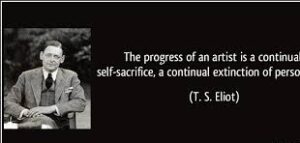
Eliot argues that the poet should not intrude upon the poem; great poetry results from the artist’s self-effacement.
“The emotion of art is impersonal”: the poet’s role is to transform personal experience into universal expression, separate from their own ego.
Marxism and Marxist Literary Criticism
Origins and Core Principles
Marxism, founded by Karl Marx (1818–1883) and Friedrich Engels (1820–1895), emerged as a political and philosophical framework advocating for a classless society based on common ownership of the means of production, distribution, and exchange. Deeply materialist in nature, Marxism explains social and natural phenomena through concrete, scientific, and logical means, rejecting idealism’s reliance on spiritual explanations. History, in Marxist thought, is driven by class struggle, the conflict between competing social classes for economic, political, and social dominance.
Key concerns include exploitation, alienation (workers reduced to repetitive, deskilled labor disconnected from the final product), and reification (people treated as mere things within capitalist systems). Marx drew inspiration from Hegel’s dialectics (change arising from opposing forces), French revolutionary ideals of liberty, equality, and fraternity, and classical economics, which Marxism sought to invert through its base–superstructure model. In this model, the economic base shapes the cultural superstructure (law, art, religion), illustrating economic determinism.
From Marxist Theory to Literary Criticism
Marx and Engels did not create a rigid theory of literature, instead allowing for a degree of artistic freedom. Engels, for example, argued that art need not be overtly political to be valuable. Nevertheless, Marxist criticism holds that authors are products of their social context: their class position and ideology influence not only their content but also their chosen form.
Realist novels, for example, with their conventional structures, may reinforce existing social orders, while experimental or fragmented forms (e.g., Kafka, Beckett) reflect the alienation and contradictions of late capitalism. Critics such as Catherine Belsey argue realism can validate prevailing ideologies by leaving conventional perspectives unchallenged.
Leninist Model and Socialist Realism
From the 1930s to the 1960s, the Leninist model in the Soviet Union imposed strict state control over the arts, insisting literature serve revolutionary goals. Experimentation was banned, and Socialist Realism became the official style. Artists like Sergei Eisenstein faced censorship when works were interpreted as critiques of Soviet leadership. This model contrasted sharply with the earlier, more liberal Marx–Engels approach.
George Steiner identifies two streams of Marxist criticism:
Engels-type — art has relative freedom from direct political control.
Leninist-type — art must explicitly serve political causes.
Russian Formalism and the Frankfurt School
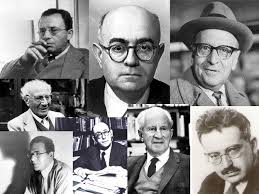
Despite suppression, Russian Formalists (Viktor Shklovsky, Boris Tomashevsky, Boris Eichenbaum) emphasized techniques like defamiliarization (making the familiar seem new) and the distinction between fabula (story) and sjuzhet (plot). Their work influenced later structuralists and the Frankfurt School (founded 1923), which merged Marxist thought with Freudian psychoanalysis. Figures like Walter Benjamin and Theodor Adorno examined culture’s role in capitalism, while playwright Bertolt Brecht developed the alienation effect in drama to remind audiences they were witnessing constructed art, not natural reality.
Marxist Literary Criticism: Ideology, Hegemony, and Class in Literature
Ideology and State Power
In Marxist theory, ideology refers to a system of ideas, images, myths, and concepts that shape how society understands itself. These values often remain implicit, quietly influencing culture, art, and literature. Louis Althusser advanced this discussion by distinguishing between state power and state control.
State power is upheld by repressive state apparatuses institutions such as law courts, prisons, the police, and the military exerting control through coercion.
State control is also maintained through ideological state apparatuses institutions like schools, political parties, the media, religion, and even art that generate consent by aligning citizens’ beliefs with the state’s expectations.
Hegemony and Consent
Antonio Gramsci introduced the crucial distinction between rule and hegemony. Rule involves direct political control and the use of force. Hegemony, by contrast, works by generating consent, embedding dominant class values so deeply that they seem “natural” or unquestionable. Cultural practices, traditions, and social norms, such as expectations about dress can reinforce hegemony without overt coercion.
Raymond Williams further explained that hegemony organizes society around dominant meanings, values, and worldviews, making them appear as universal truths. In this sense, both Althusser and Gramsci moved Marxism beyond rigid economic determinism, offering a more flexible framework that responded to the cultural liberalism of the 1960s.
Revisionist Marxism and Psychoanalysis
Traditionally, Marxism opposed psychoanalysis for its focus on individual psychology over social structures. However, Fredric Jameson bridged the gap by extending psychoanalytic concepts like the unconscious and repression into political analysis. In literature, Jameson argued, historical truths are often repressed beneath surface narratives, and careful interpretation can uncover their underlying ideological structures.
Marxist criticism thus distinguishes between a work’s overt content (the explicit narrative) and covert content (the hidden ideological subtext), much like psychoanalysis distinguishes between manifest and latent meaning.
Historical Context and Cultural Materialism

Marxist critics often relate literature to the social class of its author or to the historical conditions of its creation. Ian Watt, for example, argued that the rise of the novel in the 18th–19th centuries corresponded with the growth of the middle class, just as ancient tragedy reflected aristocratic values and folk ballads reflected rural working-class perspectives.
Later approaches, such as cultural materialism, extend this method by examining the social assumptions of the time in which a work is consumed, not only when it was produced.
Case Study: Shakespeare’s Twelfth Night
Elliott Krieger’s Marxist reading of Twelfth Night (1979) offers an example of how class analysis can reshape interpretation. While conventional readings see the play as a moral balance between indulgence and Puritan restraint, a Marxist perspective highlights the role of class privilege in determining characters’ fates.
Aristocratic figures like Orsino, Olivia, and Sir Toby enjoy the luxury of retreating into private “secondary worlds” romantic obsession, mourning, or revelry without social penalty.
By contrast, Malvolio, associated with Puritanism and the servant class, suffers humiliation without redemption.
Viola, though born aristocratic, loses this privilege when disguised as a male servant, becoming subject to the whims and manipulations of her social superiors.
This reading underscores the structural gulf between masters and servants and how privilege shapes access to personal autonomy, pleasure, and self-expression.
Russian Formalism, the Prague Linguistic Circle, and Related Theoretical Developments
Introduction to Formalism and Its Origins
Formalism is a broad critical approach that emerged in the 1910s and 1920s, developed primarily by Russian critics such as Viktor Shklovsky, Roman Jakobson, Boris Eichenbaum, and Yuri Tynyanov. Initially formed through the Society for the Study of Poetic Language (OPOYAZ) in Saint Petersburg and the Moscow Linguistic Circle, it sought to establish a scientific and objective basis for literary analysis.
Rather than viewing literature through moral, political, historical, or biographical lenses, the formalists focused on literariness the qualities that make a text distinctively literary as opposed to ordinary discourse, such as that of newspapers or casual speech.
Following political suppression in the Soviet Union during the early 1930s, the Prague Linguistic Circle featuring Jakobson, Jan Mukařovský, and René Wellek continued and refined many formalist methods, emphasizing the structural and linguistic distinctiveness of literary language.
Key Concepts in Russian Formalism
Literariness
Roman Jakobson defined this as the set of features that distinguish literary language from ordinary speech. Literature is “organized violence committed on ordinary speech,” deliberately departing from everyday communicative norms to create heightened perception.
Defamiliarization (Ostranenie) and Estrangement
Introduced by Viktor Shklovsky in Art as Technique (1917), defamiliarization refers to the process of making the familiar strange, disrupting habitual perception so readers notice details anew. Estrangement achieves this by altering vocabulary, grammar, plot patterns, or narrative perspective.
Laying Bare the Device
Shklovsky argued that literature should call attention to its own construction to its devices rather than concealing them. This promotes awareness of artistic technique rather than simply delivering content.
Tension
A structural unity within a text often created by contrast, irony, or paradox. This term becomes important later in New Criticism.
Fabula and Syuzhet
The fabula is the raw chronological sequence of events (the story), while the syuzhet is the artistically arranged narrative presentation (the plot). The transformation from fabula to syuzhet is central to a work’s artistic identity.
Formalism’s Approach to Analysis
Formalists aimed for an objective methodology that:
Concentrated on form over content
Focused on literary devices such as imagery, rhythm, and meter
Treated literature as a self-contained system governed by its own rules
Analyzed patterns and structures common to all literary works, rather than interpreting texts solely through historical or authorial context.
This contrasted with earlier critical traditions that prioritized moral lessons, political messages, or biographical detail.
Prague Linguistic Circle
When Russian formalism was suppressed under Stalin, the Prague Linguistic Circle adopted and expanded its analytical methods.
Key members included:
Roman Jakobson (already central to Russian formalism)
Jan Mukařovský
René Wellek
Their focus:
Literature as a special class of language
Systematic study of poetic language vs. ordinary language
Structural relationships within a text as key to its meaning
Related Theoretical Terms
Intentional Fallacy: The mistaken belief that a work’s meaning can be determined by the author’s intended message.
Affective Fallacy: The mistaken belief that a work’s value or meaning is determined by its emotional effect on the reader.
Objective Correlative (T.S. Eliot): A set of objects, situations, or events that evoke a particular emotion without direct statement.
External Form: The visible formal features of a work, e.g., stanza structure, rhyme scheme, or verse type.
Vladimir Propp and Narrative Morphology

Though not strictly a formalist, Vladimir Propp’s Morphology of the Folktale (1928) has close ties to formalist thinking. By examining over 100 Russian folktales, Propp identified:
31 narrative functions (recurring plot units)
Seven archetypal character roles:
Hero – embarks on a moral, physical, or spiritual quest
Villain – opposes the hero’s quest
Donor – provides magical aid
Dispatcher – sends the hero on the quest
False Hero – claims the hero’s achievements
Helper – assists the hero
Princess (or prize) – reward for the hero’s success, often targeted by the villain, and the Princess’s father who bestows it.
Propp’s method revealed underlying structural patterns in narratives, although it did not address thematic depth or emotional impact.
Brecht’s Alienation Effect

While German playwright Bertolt Brecht was not a formalist, his concept of Verfremdungseffekt (alienation effect) parallels defamiliarization. Brecht sought to prevent audiences from emotionally identifying with stage events, instead making them aware of theatrical construction and provoking critical thought — much as formalists encouraged awareness of a literary text’s devices.
Strengths and Limitations of Formalism
Strengths:
Clear, systematic method for analyzing literature
Emphasis on craft and form over biography or politics
Provided foundational ideas for structuralism and semiotics
Limitations:
Ignores historical, political, and emotional contexts
Cannot predict the specific innovations literature will take
Struggles to account for the reader’s natural moral or emotional responses
Russian Formalism, New Criticism, and Their Legacy – A Combined Overview
In the early 20th century, two influential but distinct approaches to literary theory emerged, Russian Formalism and New Criticism. Both shared a focus on the text itself, emphasizing form, structure, and the mechanics of literary creation, yet each arose in different cultural and intellectual contexts and developed its own methods, priorities, and limitations.
Russian Formalism
Russian Formalism originated in the 1910s and 1920s with critics such as Viktor Shklovsky, Roman Jakobson, Boris Eichenbaum, and Yuri Tynyanov, later joined by narrative theorist Vladimir Propp. These scholars sought to define what makes literature distinct from other forms of discourse, a concept they called literariness. Central to their approach were techniques such as ostranenie (defamiliarization or estrangement) making the familiar seem strange to renew perception and structural analysis of narrative components.
Propp’s seminal work, The Morphology of the Folktale, identified recurring archetypes in stories: the hero, villain, donor, dispatcher, false hero, helper, princess (or prize), and her father. He also described 31 narrative functions plot stages common to many folktales that map the protagonist’s journey, whether physical, moral, or spiritual. Formalists emphasized that stories share underlying structures and devices that can be analyzed scientifically, regardless of the author’s personal life or historical background.
The movement also influenced theatre through parallels with Bertolt Brecht’s alienation effect, which broke emotional identification between audience and performance, forcing critical engagement. However, Russian Formalism had limitations: it often neglected emotional, moral, or political aspects of literature and provided no predictive framework for the direction of artistic change.
New Criticism
Emerging in the United States and Britain in the early to mid-20th century, New Criticism arose partly as a reaction against biographical-historical criticism the dominant 19th-century mode that prioritized the author’s life, personality, and historical context over the text itself. In extreme forms, this older approach sometimes ignored the actual literary work in favor of recounting the writer’s biography.
Figures like T.S. Eliot argued for treating poetry as autonomous, advocating attention to the poem itself rather than the poet. I.A. Richards trained students to interpret poems without knowing the author’s identity, warning against the intentional fallacy (deriving meaning from presumed authorial intent) and the affective fallacy (relying on personal emotional responses). His student William Empson expanded these methods. John Crowe Ransom named and popularized the approach in his 1941 book The New Criticism, formalizing it as a school of thought.
New Criticism championed close reading meticulous analysis of textual elements such as imagery, symbolism, metaphor, rhyme, meter, point of view, and structure to arrive at a single best interpretation grounded in the text alone. It identified four key linguistic devices as central to textual complexity: ambiguity (multiple meanings), paradox (apparent contradictions that deepen meaning), irony (contrasts between literal and intended meaning), and tension (conflicts between literal and figurative elements). These, along with other formal devices, were seen as contributing to the organic unity of the text.
The method worked best with shorter works, particularly poetry, and even required attention to historical semantics (e.g., noting that “nice” once meant “foolish”), but always subordinated such research to the internal evidence of the text.
Criticism and Legacy of New Criticism
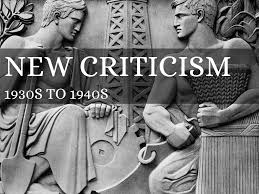
New Criticism’s rigorous textual focus had its detractors. Critics like René Wellek argued it was ahistorical, ignoring the human meaning, social function, and political context of literature. Others felt it reduced literary study to an intellectual puzzle-solving exercise, neglecting broader moral, cultural, and emotional dimensions. By discarding extra-textual influences gender, race, class, subjectivity, New Criticism excluded key avenues of interpretation that later movements like feminism, postcolonialism, and cultural studies would explore.
The insistence on scientific precision in literary criticism, advocated by Ransom and others, also met resistance, with some arguing that literature’s value lay beyond measurable or systematic methods.
Nevertheless, New Criticism left a lasting mark. Its core practices, close reading, attention to textual form, recognition of paradox and ambiguity remain foundational in literary studies. While there was no direct historical connection between New Criticism and Russian Formalism, both emphasized the autonomy of the text and focused on literary craft over external contexts, particularly valuing poetry as an object of study.
Russian Formalism and New Criticism together reshaped literary analysis in the 20th century by turning critical attention inward, to the structures, devices, and internal logic of literary works. Both revealed the power of formal elements to shape meaning, yet both also faced the critique that by ignoring historical, social, and biographical contexts, they risked producing partial or overly abstract interpretations. Their legacies endure in the ongoing tension between text-centered and context-centered approaches, a debate that continues to define the study of literature today.
Psychoanalysis and Psychoanalytic Literary Criticism
Definition and Scope
Psychoanalytic literary criticism applies principles and methods from psychoanalysis to interpret literature. Rooted in therapeutic practice, psychoanalysis investigates the interplay between the conscious and unconscious mind, aiming to resolve mental disorders by bringing repressed desires, fears, and conflicts into conscious awareness. Literary critics borrow these ideas to understand characters, narratives, and symbolic patterns.
Origins and Foundations
Sigmund Freud (1856–1939), Austrian neurologist and founder of psychoanalysis, remains a central cultural influence despite controversies over his methods and theories.
Freud’s core insight: the unconscious—a vast mental realm beyond conscious thought—profoundly shapes behavior, emotions, and creativity.
His work often focused on sexuality, sparking both interest and criticism.
Infantile sexuality: sexual drives begin in early childhood, not at puberty.
Oedipus complex: male child’s unconscious desire to replace the father and possess the mother, with broader symbolic applications to generational rivalry (e.g., Harold Bloom’s Anxiety of Influence).
Key Freudian Concepts
Libido: sexual energy driving behavior, cycling through stages:
Oral
Anal
Phallic
(Later tied to the broader life instinct, Eros, and counterbalanced by the death instinct, Thanatos.)
Repression: pushing unresolved conflicts and traumatic memories into the unconscious, where they continue to influence life.
Example: The Machinist — insomnia and distress from a repressed hit-and-run incident.
Projection: attributing one’s unacceptable desires to others (e.g., accusing classmates of cheating due to one’s own impulses).
Structure of the Psyche:
Id: unconscious, driven by the pleasure principle (immediate gratification).
Ego: conscious, guided by the reality principle (weighs consequences).
Superego: moral conscience shaped by societal, religious, and legal codes.
These forces overlap and conflict in decision-making.
Dream Work

Dreams transform hidden wishes or fears into symbolic images, akin to literary devices.
Key processes:
Displacement: shifting emotional significance from one object/person to another.
Condensation: merging multiple people, events, or ideas into one dream image.
Example: a young man fearing his authoritarian father and loving a French girl dreams of a French policewoman—condensing “authority” and “romantic object” into one figure.
Freud saw dreams as a disguised outlet for repressed desires, paralleling literature’s indirect, symbolic communication.
Criticism and Limitations
Freud’s emphasis on sexuality and universal symbols (e.g., towers as phallic) has been criticized for oversimplification and cultural bias.
Example: a snake might carry phallic meaning for Freud, but religious reverence for a snake in some cultures undermines a universal interpretation.
Even in Freud’s lifetime, these ideas faced satire—hence his famous retort: “Sometimes a cigar is just a cigar.”
Interpretations are inevitably subjective and often controversial.
Relevance to Literature
Both the unconscious and literature:
Avoid direct statements
Communicate via symbols, metaphors, and imagery
Require interpretive engagement
Thus, psychoanalysis provides tools for reading literature as an encoded expression of psychological conflict.
Transition to Jung
The lecture closes by signaling a shift toward Carl Gustav Jung, Freud’s one-time protégé, who later developed archetypal criticism, focusing on universal patterns and myths rather than solely on sexual symbolism.
Psychoanalytic Literary Criticism
This module explores three major figures in psychoanalytic literary criticism Carl Gustav Jung, Sigmund Freud, and Jacques Lacan and their differing approaches to literature.
Carl Gustav Jung & Archetypal Criticism
A former disciple of Freud, Jung diverged by focusing on the collective unconscious, a shared human repository of primordial images, symbols, and patterns called archetypes.
Archetypes appear across cultures and eras in myths, dreams, rituals, and literature (e.g., the hero, death-rebirth cycle).
Jung saw literature as expressing these archetypes, resonating with deep-seated racial memories and evoking universal emotional responses.
Sigmund Freud & Psychoanalytic Reading of Hamlet
Freud emphasized the personal unconscious and unconscious motives of characters and authors.
His reading of Shakespeare’s Hamlet centers on the Oedipus complex Hamlet’s unconscious desire for his mother and rivalry with his father prevents him from killing his uncle, who has enacted Hamlet’s own repressed wishes.
Freud also linked the play’s creation to Shakespeare’s own life experiences, a reading later expanded by Ernest Jones.
Jacques Lacan & Language-Centered Psychoanalysis
Lacan fused linguistics with psychoanalysis, asserting that the unconscious is structured like a language.
Drawing on Saussure’s signifier/signified distinction, Lacan argued meaning is endlessly deferred and mediated through differences in language.
He aligned Freud’s dream mechanisms condensation and displacement with rhetorical figures metaphor and metonymy.
His mirror stage theory describes how a child forms self-identity by distinguishing itself from others, moving from the imaginary (fusion with the mother) into the symbolic (language, law, and the father figure).
Psychoanalytic Literary Criticism (Lacanian Reading of The Purloined Letter)
This final module revisits Lacanian psychoanalysis, comparing it with Freud and Jung, and demonstrates its application through Edgar Allan Poe’s The Purloined Letter.
Lacanian Focus in Literary Criticism
Like Freudians, Lacanian critics examine unconscious forces, but they search for these in the text itself rather than in the author or characters.
They look for contradictions, gaps, and slippages in meaning, reflecting Lacan’s notion that the unconscious is structured like a language.
Central is the elusive nature of the signified the perpetual deferral of meaning beneath the signifier.
Plot Summary of The Purloined Letter
A queen hides a sensitive letter from the king; a minister notices her anxiety, steals the letter in plain sight, and replaces it with a fake.
The queen enlists the police, who search the minister’s apartment but fail to find the letter.
Detective Dupin deduces that the letter is hidden in plain view, returns to the minister’s apartment, swaps it with another fake, and restores the original to the queen.
Lacanian Interpretation
The stolen letter symbolizes the unconscious: its actual content is unknown, but its effects on the characters are powerful and observable.
As with the unconscious, we can only infer content through indirect signs; the signified always remains inaccessible, hidden beneath the signifier.
The letter’s concealment “in plain sight” mirrors how meaning is embedded yet obscured in language visible yet unreachable.
Key Comparative Insight
While both Freud and Lacan originate from the same psychoanalytic tradition, Freud centers on personal unconscious desires (e.g., in Hamlet), whereas Lacan shifts focus to linguistic structures and the interplay between signifier and signified.
Jung diverges further, emphasizing universal archetypes from the collective unconscious.
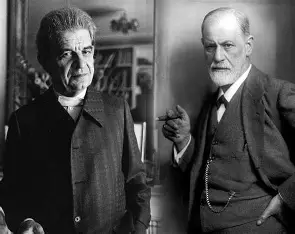
Structuralism Overview
Structuralism is a theoretical approach concerned with understanding systems through their underlying structures rather than individual elements. It grew out of Russian Formalism and was heavily influenced by Ferdinand de Saussure and Charles Sanders Peirce, as well as anthropologists, linguists, and literary theorists like Roman Jakobson, Viktor Shklovsky, Claude Lévi-Strauss, Vladimir Propp, and Jean Piaget.
Key Saussurean Concepts
Langue vs. Parole:
Langue: The shared social system of language.
Parole: Individual speech acts (instances of language use).
Linguistics should study langue as the underlying structure.
Signs: Each sign has two parts:
Signifier: The form (sound/image/marks on paper).
Signified: The mental concept or meaning.
Arbitrariness of the Sign:
The link between signifier and signified is culturally agreed, not natural.
Example: dog (English), chien (French), Hund (German) — all refer to the same animal but use different sounds/forms.
Meaning by Difference: Signs derive meaning through contrast with others, not intrinsic properties.
Semiotics: The study of sign systems, extending beyond language to images, gestures, symbols, and cultural codes.
Structuralism & Formalism
Formalism focuses on the devices and techniques authors use in creating a work.
Structuralism focuses on how meaning is constructed and perceived, exploring the cultural systems that give signs their meaning.
Russian Formalists & Linguistic Theory
Roman Jakobson:
Communication model: Addresser → Message (within context, contact, code) → Addressee.
Poetic Function: Projects patterns from the axis of selection (metaphor) onto the axis of combination (metonymy).
Emphasized word choice for emotional and stylistic effects.
Viktor Shklovsky:
Defamiliarization/Estrangement: Making familiar objects appear strange to refresh perception.
Laying Bare the Device: Revealing the techniques used in art.
Anthropological Structuralism
Claude Lévi-Strauss:
Applied structuralism to myths, rituals, and traditions.
Focused on structural patterns over narrative sequence.
Influenced narratology.
Narrative Structuralism
Vladimir Propp:
Studied Russian folktales and identified 31 narrative functions (e.g., hero’s task, villain’s punishment, hero’s marriage).
Compared narrative roles to grammatical functions.
Structuralist Psychology
Jean Piaget:
Defined structures by:
Viewing the system as a whole.
Studying transformations within the system.
Ensuring transformations remain within and preserve the system’s laws.
Connected structuralism with logic, biology, psychology, and generative grammar.
Core Idea
Structuralism holds that meaning is not inherent but is produced within systems of relationships, whether in language, literature, myth, or culture. It analyzes how parts relate to the whole, and how cultural conventions shape interpretation.
Structuralism, Barthes, and Later Developments
Structuralism originated in Europe as a movement grounded in linguistic principles, particularly those of Ferdinand de Saussure and Charles Sanders Peirce, and extended into fields such as anthropology, sociology, history, philosophy, and literary criticism. In literature, structuralism treats texts as second-order signifying systems that rely on the pre-existing structures of language. It focuses less on authorial intention and more on the conventions, codes, and systems that shape meaning, positioning the reader not the author at the center of interpretation.
A key structuralist claim is that language and cultural codes are arbitrary, meaning is generated relationally within systems, and texts are part of broader cultural sign systems rather than direct reflections of reality. Structuralism opposes mimetic criticism and emphasizes patterns, structures, and rules whether in a single text or across a body of works to uncover underlying narrative or genre principles, as in Northrop Frye’s concept of mythoi.
Roland Barthes was central to the transition from structuralism to post-structuralism. In works like Mythologies (1957), he expanded semiotic analysis to all areas of culture, framing myth as a mode of signification. His famous essay “The Death of the Author” (1968) rejected the idea of fixed meaning anchored in authorial intent, portraying the text as a “tissue of quotations” drawn from cultural discourse. This shifted criticism toward openness, multiplicity, and the reader’s interpretive agency.
By the 1970s, structuralism in America, represented by scholars like Fredric Jameson, Jonathan Culler, and Stanley Fish, integrated with reader-response theory, which held that meaning is produced through the reader’s engagement. This period also saw the rise of narratology, developed by figures such as Barthes, Gérard Genette, Seymour Chatman, and Wayne Booth, which systematically analyzed narrative elements such as time, mode, and point of view. The combined effect was a move away from aesthetic closure toward open-ended, politically and theoretically informed readings, with a sustained interest in the structures that make interpretation possible.
Archetypal Criticism
Etymology & Meaning
The term “archetype” derives from the Greek roots arche (“beginning”) and typos (“imprint”), meaning an original model or pattern from which others develop. In literature, archetypes are recurring motifs, symbols, and themes that reappear across works, cultures, and eras. Archetypal criticism studies these universal patterns to reveal connections between individual texts and broader human experience.
Origins & Key Figures
Archetypal criticism draws from anthropology and psychology, particularly the work of Carl Jung (1875–1961), who introduced the idea of the collective unconscious—a set of inherited, universal images and memories shared by all humans. Jung’s concepts influenced Maud Bodkin (Archetypal Patterns in Poetry, 1934) and Northrop Frye (Anatomy of Criticism, 1957). Other contributors include Christopher de Quincy, who identified seven archetypal roles: warrior, poet, artist, scientist, philosopher, shaman, and mystic.
Core Concepts
Archetypes appear in characters (hero, wise old man, trickster, father, mother, child), plots (quest, journey, tragedy, comedy), settings, and symbols (colors, objects, natural elements). Examples:
Colors: red (passion, sacrifice, danger), green (growth, fertility, poison), blue (truth, spirituality), black (death, mystery), white (purity, innocence, or in some cultures, death).
Motifs & Figures: hero as rescuer, wise old man as guide, trickster as deceiver, father as authority, mother as nurture.
Natural Symbols: water as the unconscious; descent into water as confrontation with deep fears.
Jung’s Contributions
Jung viewed archetypes as primordial images formed in early human history. They appear in myths, dreams, and literature across unrelated cultures, supporting their universality. He emphasized the process of individuation—self-realization through integrating unconscious archetypal elements. Key terms include anima (feminine aspect in men), animus (masculine aspect in women), and shadow (the dark, unacknowledged side of personality).
Northrop Frye’s System
Frye classified archetypes within mythic structures linked to the cycle of seasons:
Spring (Comedy): renewal, happy endings.
Summer (Romance): heroic triumph, innocence.
Autumn (Tragedy): decline, defeat.
Winter (Satire/Irony): loss of order, absence of leadership.
He emphasized that all literature fits into a unified mythic framework, with archetypes functioning as recurring symbols shaping the reader’s experience.
Strengths & Criticisms
Archetypal criticism reveals deep cultural connections and shared human responses, explaining its lasting appeal. It intersects with psychology, anthropology, and cultural studies. However, critics argue it can overlook individual authorial creativity, historical context, and precise definitions of myths and symbols.
Conclusion
The archetypal approach seeks universal patterns in literature that resonate across time and culture. By identifying these structures—whether in myth, film, or novels—critics connect individual works to humanity’s shared imaginative heritage, offering a lens that is both timeless and cross-cultural.
Post-Structuralism

Post-Structuralism arose in the 1960s in France as both a continuation of and critique of Structuralism, which sought to explain human culture through systems of signs and linguistic structures. While Structuralism focused on discovering stable codes of meaning, Post-Structuralism rejected the idea of fixed structures, emphasizing instead instability, ambiguity, and the multiplicity of meanings. Thinkers such as Derrida, Foucault, Barthes, and Kristeva challenged binary oppositions, stable truths, and author-centered interpretation. Historical events (like the 1968 French student-worker revolts and disillusionment with orthodox Marxism) fueled the movement, which aligned with radical philosophies such as Feminism and Anarchism. Notably, Derrida’s 1966 lecture on “Structure, Sign, and Play” and Barthes’s 1967 essay “The Death of the Author” became foundational texts, shifting focus from the author to the reader and proliferating possible interpretations.
Deconstruction and Reading Practices
The second lecture turns to Deconstruction, described as applied Post-Structuralism. While Structuralism sought systematic knowledge of texts, deconstruction reveals its impossibility by exposing contradictions, suppressed meanings, and instability in language. Reading “against the grain,” it highlights a text’s internal disunity rather than its unity (as New Criticism attempted). Examples include Huckleberry Finn (undermining human rights instead of affirming them) and Brokeback Mountain (potentially reinforcing restrictive norms rather than liberating them).
Key concepts include:
Différance (Derrida): meaning is both different and endlessly deferred. Language never fixes meaning, only shifts it.
Binary oppositions (male/female, white/black) are hierarchical and unstable, dependent on each other. Deconstruction can invert or collapse them.
Readerly vs. Writerly texts: Readerly texts impose fixed meaning, while Writerly texts invite playful, plural interpretations.
Role of the reader: Meaning is shaped by reader identity (class, gender, race, sexuality) and cultural contexts, with no stable authority.
Ultimately, deconstruction underscores the undecidability of meaning and the decentered, playful nature of textual interpretation.
Post-Structuralism, Language, and Truth
The final lecture situates Post-Structuralism against Enlightenment rationalism (Kant, Descartes, Locke) and Western religious traditions (Neo-Platonism, Catholicism). Its philosophical roots trace to Nietzsche, who rejected language as a reliable means of conveying truth in his 1873 essay On Truth and Lies in an Extra-Moral Sense. Post-Structuralism argues that the signifier-signified relation is unstable, leaving meaning in perpetual “free play.”
Through decentering, it challenges all frameworks, systems, and universal truths as fictional constructs. There is no single Truth, only multiple truths shaped by unstable structures. Moreover, Post-Structuralism critiques power structures and hegemonies, examining how systems maintain hierarchies and dominance. Thus, its implications extend beyond literary theory, influencing broader cultural, social, and political critique.
Combined Synthesis
Across the three posts, Post-Structuralism emerges as a multifaceted movement critiquing the certainties of Structuralism, Enlightenment rationalism, and Western traditions. It rejects the idea of fixed meaning, stable structures, or a singular truth, insisting instead on instability, multiplicity, and the play of language.
Historically, it arose in 1960s France during political upheaval, influenced by radical philosophies and thinkers like Derrida, Barthes, and Foucault.
Methodologically, it is best represented by Deconstruction, which dismantles texts by exposing contradictions, unstable binaries, and deferred meaning, shifting interpretive power from the author to the reader.
Philosophically, it owes much to Nietzsche, rejecting universal truth claims and questioning the adequacy of language as a system of representation.
Culturally, it critiques hegemonies and power structures, positioning itself as not just a literary approach but a broader intellectual resistance to authority and rigid systems.
In sum, Post-Structuralism is not a single school but a set of approaches united by skepticism toward stable meaning and authority, embracing instead ambiguity, plurality, and the politics of interpretation.
Post-Structuralism

emerges as both a continuation and critique of Structuralism, especially in the field of literary and cultural criticism. While Structuralism sought stable systems of meaning and objective analysis of culture through semiotics, Post-Structuralism emphasizes instability, plurality, and indeterminacy of meaning. It resists the idea of fixed truths, stable narratives, or universal frameworks, instead promoting free play, multiplicity, and self-critical approaches.
Core Principles and Thinkers
Jacques Derrida: In Structure, Sign, and Play in the Human Sciences (1967), Derrida introduced the notion of “decentering,” highlighting how structures break down, and developed the method of Deconstruction. His concepts of différance (meaning is both different and deferred) and graft (the shifting of meaning depending on context) revealed language as unstable and incapable of securing fixed truths.
Roland Barthes: Advanced semiotics in Elements of Semiology (1967) and later challenged authorial authority in The Death of the Author. Barthes argued that texts are “a tissue of quotations” drawn from multiple sources, where meaning emerges in the reader rather than being determined by the author.
Judith Butler: In Gender Trouble (1990), she introduced the theory of performativity, arguing that gender identity is not innate but produced through repeated social performances, thereby exposing how language and norms construct identities.
Other figures like Umberto Eco (The Open Work, The Absent Structure), Deleuze & Guattari (Rhizome), Lyotard (The Postmodern Condition), and Foucault (The Foucault Reader) expanded Post-Structuralist ideas across aesthetics, philosophy, history, and social critique.
From Modernism to Postmodernism
Post-Structuralist thought is closely tied to Postmodernism. Ihab Hassan’s contrasts between Modernism and Postmodernism highlight key shifts:
Modernism = form, design, hierarchy, determinacy, centering, grand narratives.
Postmodernism = anti-form, play, anarchy, indeterminacy, decentering, little narratives (petite histoires).
This framework situates post-structuralism as aligned with Postmodernism’s rejection of universal truths, certainty, and hierarchy.
Impact on Literature and Criticism
Narrative: Traditional narrative, with its linearity and closure, is destabilized. Writers like William S. Burroughs (Naked Lunch) and John Fowles (The French Lieutenant’s Woman) broke conventional structures, foregrounding openness, fragmentation, and play.
Authorship: The “death of the author” relocates authority from the writer to the reader. Meaning becomes collaborative, plural, and reader-centered.
Interpretation: Post-Structuralist criticism emphasizes paradoxes, contradictions, and undecidability. It analyzes binary oppositions (male/female, good/evil, high/low culture) to reveal their instability and interdependence.
Language: Language itself is problematized. Rather than a transparent medium, it is seen as unreliable, unstable, and constantly undermining fixed meanings. Works often highlight this instability by playing with language, as seen in A Clockwork Orange or Burroughs’s experimental prose.
Open Texts: Echo’s idea of the “open work” captures how texts resist closure and invite multiple interpretations, completed by the reader.
Wider Implications
Post-Structuralism extends beyond literature into critiques of science, religion, Enlightenment rationalism, and power structures. It questions universal truths and exposes how hegemonies sustain dominance through language and knowledge systems. By doing so, it not only reshapes literary criticism but also informs philosophy, gender theory, cultural studies, and political critique.
Post-Colonial Theory & Criticism

Post-colonial theory and criticism explore the cultural, historical, and literary implications of colonialism and its aftermath, particularly in former European colonies across Africa, Asia, the Caribbean, and South America. The field challenges the Eurocentric notion that literature and culture can be judged by universal standards, exposing instead how European powers historically imposed their values while marginalizing colonized voices. Thinkers like Frantz Fanon, Homi K. Bhabha, and Edward Said laid the foundation of this discourse. Fanon emphasized reclaiming identity and culture erased by colonialism, Bhabha introduced concepts such as hybridity, mimicry, and ambivalence to show how colonized peoples negotiate identity in the space between colonizer and colonized, and Said, in his seminal Orientalism, demonstrated how the West constructed the “Orient” as an exotic yet inferior other through cultural imperialism.
Post-colonial studies further examine how colonial subjects often termed the subaltern are shaped by European discourse yet may resist and speak back against it. Gayatri Spivak, in Can the Subaltern Speak? highlighted the difficulty of marginalized voices being heard within dominant systems of power. Literary examples such as Shakespeare’s The Tempest illustrate these dynamics: the character of Caliban, taught language by Prospero, uses it not for submission but for resistance, embodying the possibility of the colonized to challenge their oppressors. This emphasis extends to expanding the literary canon itself, incorporating works by post-colonial writers like Chinua Achebe, Wole Soyinka, Derek Walcott, Salman Rushdie, and Arundhati Roy, whose voices reshape cultural narratives once dominated by the West.
Ultimately, post-colonial criticism investigates how texts represent colonization, construct identities, and define the “other.” It asks whether literature reinforces colonial ideologies or resists them, whether it silences colonized voices or enables them to speak. Central concerns include power, culture, economics, religion, and hybridity, alongside concepts like double consciousness and ambivalence. In essence, the post-colonial outlook dismantles Eurocentric universalisms and restores agency to those historically marginalized, positioning literature as a site of resistance, negotiation, and redefinition of identity.
New Historicism in Literary Criticism
New Historicism emerged in the 1980s, spearheaded by Stephen Greenblatt in his influential book Renaissance Self-Fashioning (1980). Building on this foundation, scholars such as Louis Montrose emphasized the “textuality of history and the historicity of texts,” setting the tone for an approach that rejects the traditional divide between literary works as the central “foreground” and history as a mere “background.” Instead, literature and non-literary records are treated as co-texts products of the same cultural and historical moment.
A defining feature of New Historicism is its method of beginning analysis with a historical anecdote a document drawn from the same period as the literary text which is read not simply as context but as an equally important text. This approach decenters the authority of canonical works, placing them within the larger archival continuum of records such as penal reports, medical notes, colonial writings, and other cultural documents. This framework often highlights the violence, suppression, and ideological struggles that shaped Renaissance society, aligning with Michel Foucault’s idea of history as structured by power, surveillance, and discourse.
In contrast to old historicism (such as E. M. Tillyard’s Elizabethan World Picture), which subordinated history to literature, New Historicism emphasizes parallels rather than hierarchies between literary and non-literary texts. This shift also reflects poststructuralist influences, particularly Derrida’s assertion that there is “nothing outside the text.” For New Historicists, the past is accessible only through written forms, always mediated by ideology, discourse, and language. Consequently, historical documents and literature alike are seen as reconstituted through successive readings, with interpretation itself forming new “versions” of reality.
Foucault’s panopticon model provides a powerful metaphor within this framework: just as prisoners internalize surveillance without knowing when they are observed, individuals internalize state power and ideology. This links New Historicism to Gramsci’s hegemony and Althusser’s interpellation, highlighting how power operates not only through force but also through internalized cultural control. As such, New Historicist criticism often critiques the state’s pervasive influence and aligns itself with liberal values of freedom, plurality, and resistance to oppression.
Despite its insights, New Historicism has drawn criticism. Traditional historians object that it places too much interpretive weight on isolated documents, making its methods more appealing to literary critics than to historians. Nevertheless, its accessible writing style (avoiding the dense theoretical jargon of figures like Gayatri Spivak) and its vivid, dramatic use of historical material have given it wide appeal. The approach also offers a practical framework: for instance, analyzing Shakespeare’s comedies through historical studies of family, marriage, and gender relations, such as Lawrence Stone’s The Family, Sex and Marriage in England 1500–1800 (1979), to reveal the interplay between literary form and lived social history.
In sum, New Historicism reshaped literary criticism by placing texts within a network of cultural and historical discourses, exposing how power, ideology, and representation intersect. It remains influential for its ability to blend theoretical insight with practical analysis, even as its methods continue to invite debate.
New Historicism & Cultural Materialism
The discussion begins by outlining New Historicism, a critical practice that juxtaposes literary and non-literary texts in order to “defamiliarize” canonical works and free them from the weight of traditional scholarship. It emphasizes the interplay between literature and broader social structures such as state power, patriarchy, and colonization. Drawing on post-structuralist ideas, New Historicism highlights the “historicity of the text and the textuality of history.” A key example is Louis Montrose’s analysis of A Midsummer Night’s Dream, which illustrates how literature both shapes and is shaped by culture. In Shakespeare’s play, patriarchal norms are reinforced even under the rule of a female monarch, Queen Elizabeth. Montrose argues that Elizabeth’s cultural image was sustained by drama and poetry of her time, while those very representations simultaneously upheld patriarchal ideology. This reflects how texts can both mirror and construct history.
The focus then shifts to Cultural Materialism, defined by Graham Holderness as a politicized historiography. Popularized by Jonathan Dollimore and Alan Sinfield in Political Shakespeare (1985), it combines four elements: historical context, theoretical method, political commitment, and textual analysis. Unlike liberal humanism, it incorporates Marxist, feminist, and post-structuralist influences. Cultural materialists emphasize recovering repressed or ignored histories and analyzing the institutions such as publishing, theater, or film that continue to shape Shakespeare’s presence today. Strongly influenced by Raymond Williams’ concept of “structures of feeling,” cultural materialism recognizes literature as a potential site of resistance to dominant ideology.
Finally, the contrast between the two approaches is clarified. New Historicism is often seen as more politically pessimistic, focusing on how individuals are constrained by social structures and repressive ideologies. Cultural Materialism, by contrast, is more optimistic, highlighting the agency of individuals in making history and viewing literature as a source of oppositional values. Whereas New Historicism situates texts within their original political context, Cultural Materialism places them in relation to the present and contemporary institutions. This divergence is humorously captured through their hypothetical responses to the English Civil War: new historicists would struggle to explain how resistance was possible at all, while cultural materialists would struggle to explain how it ever ended.
In summary, both approaches illuminate the entanglement of literature, history, and power, but they differ in emphasis New Historicism stressing textuality and constraint, while Cultural Materialism stresses political intervention, present-day relevance, and the possibility of change.
Reader Response Criticism
Reader Response Criticism emerged as a challenge to formalist approaches, which treated texts as autonomous objects with fixed meanings. Instead, Reader Response theorists argue that meaning is not inherent in the text but is actively created through the interaction between reader and text.
Key thinkers shaped this school of thought:
Stanley Fish emphasized that reading is an active process, bound by interpretive strategies of particular communities. His idea of interpretive communities highlights how groups, such as book clubs or fanbases, collectively determine “valid” meanings.
Wolfgang Iser introduced the concept of the implied reader and argued that texts contain gaps or blanks that readers must imaginatively fill. For him, meaning arises when the reader bridges these indeterminacies, thus co-creating the work.
Louise Rosenblatt described literature as a transactional experience, where the reader “lives through” the poem or narrative, shaping meaning through personal engagement.
Roman Ingarden, from a phenomenological angle, saw literary works as schemas completed by the reader’s conscious acts. His notion of indeterminacy reinforces the idea that texts are unfinished until concretized by readers.
Later theorists like Norman Holland and David Bleich expanded the field with subjectivist approaches, suggesting that responses are often rooted in deep psychological needs, further decentralizing textual authority.
This approach redefines literature: the reader is no longer passive but supreme, the central agent of interpretation. Theories such as Barthes’ Death of the Author resonate here—what matters is not authorial intent but the dynamic dialogue between text and reader.
However, Reader Response Criticism is not without criticism. Opponents argue it risks turning any interpretation into a valid one, potentially ignoring historical, cultural, or textual constraints. Despite this, its influence remains strong, particularly because it values subjectivity, diversity of meaning, and the lived experience of readers.
Ultimately, Reader Response shifts the focus from “What does the text mean?” to “What does the text do—for the reader, individually or communally?”.
Reader Response Criticism…
emerged in the 1960s as part of post-structuralist thought. It challenged the idea that texts have meaning on their own, instead arguing that meaning comes alive only when a reader engages with the text. In this view, the reader is central and active, not a passive consumer.
The theory holds that every reader brings their own attitudes, beliefs, knowledge, and experiences to a work, shaping their interpretation. This means that responses vary across individuals and communities. Such diversity of interpretation forms the basis of what are called interpretive communities.
One intellectual foundation of this approach comes from Edmund Husserl, the German philosopher, who developed phenomenology—a study of how things appear in consciousness. Applied to literature, this idea stresses that texts can be perceived in multiple ways, depending on the reader’s perspective.
Hans Robert Jauss, another German critic, argued that the history of a work’s reception determines its aesthetic value. Similarly, Louise Rosenblatt, in works such as Literature as Exploration (1938), described reading as a transactional process. She insisted that a poem or text becomes meaningful only through what the reader “lives through” while engaging with it.
In contrast, formalist critics like Wimsatt and Beardsley had dismissed the importance of readers, coining the term affective fallacy to warn against treating readers’ responses as part of interpretation. Reader response critics directly opposed this, asserting that meaning is not fixed within the text but is created through reading.
Stanley Fish is a key figure in this school. He argued that literature exists only when it is read, and meaning is shaped by interpretive communities—groups of readers who share cultural or educational backgrounds. For Fish, reading is an active and temporal process, not a detached survey of a text as if it were a static object.
Wolfgang Iser also emphasized the reader’s role, focusing on the gaps or blanks in texts that readers must fill in, thus becoming co-creators of meaning. He introduced the idea of the implied reader—the ideal reader anticipated by the text—while contrasting it with the actual reader who brings personal knowledge and attitudes to interpretation.
Wayne Booth used the phrase implied reader to describe the audience a work seems to construct. Roman Ingarden, in his phenomenological approach, highlighted indeterminacy in texts and argued that readers concretize these unfinished elements through active reading, creating their own “cozy realities.”
Over time, variations of this criticism emerged. Subjectivist critics like Norman Holland and David Bleich emphasized that readers’ psychological needs and personal histories influence interpretation. Others focused on social reader response, studying how communities (e.g., book clubs or online fan groups) collectively determine acceptable meanings of a text.
Despite its strengths, reader response criticism faces limitations. Critics argue it risks making any interpretation valid, potentially ignoring the author, the historical context, or the ability of literature to expand a reader’s understanding. Some fear it reduces the text to little more than a tool for personal projection.
In conclusion, reader response criticism redefined literature as an event that occurs in the reader’s mind. It emphasized that reading is an active, participatory process, rejecting the formalist view of the text as autonomous. The theory’s central concepts include the implied reader, interpretive communities, phenomenology, and gaps/indeterminacy. Its key figures include Husserl, Jauss, Rosenblatt, Fish, Iser, Booth, and Ingarden. The unifying principle is that in literature, the reader is supreme.
Semiotics
Or the study of signs, explains how meaning is produced within signifying systems. Communication involves encoding, transmitting, and decoding signs. The field owes much to Ferdinand de Saussure and Charles Sanders Peirce, and later thinkers like Roman Jakobson, who modeled communication between addresser and addressee within a specific context.
A key part of Saussure’s contribution is the idea of binary oppositions—such as synchrony vs. diachrony, langue vs. parole, and signifier vs. signified. Synchrony refers to studying a language at a specific point in time, while diachrony studies its historical development. Saussure emphasized synchronic analysis, which focuses on how language functions as a system in the present.
French linguist Émile Benveniste extended semiotics into psychoanalysis and structural linguistics. He argued that human subjectivity exists only through language, especially through pronouns like I. The pronoun “I” signifies the speaker but does not define them; it is context-dependent. In his view, individuals are both speaking through language and spoken by language.
Roland Barthes’ essay S/Z (1970) was a landmark in semiotics. It analyzed Balzac’s story Sarrasine and emphasized the plurality of meanings in texts. Drawing from Julia Kristeva’s work on semiotics, Barthes proposed that reading should not be about uncovering one fixed truth but about exploring multiple possible meanings. He introduced five narrative codes that guide interpretation:
Hermeneutic code (enigma code) – mysteries or unanswered questions that drive a narrative.
Proairetic code (action code) – sequences of actions or behaviors that create tension.
Semantic code – connotations that enrich basic meanings.
Symbolic code – deeper structures of meaning, often built on binaries or antithesis (e.g., hero/villain, good/evil).
Cultural code – references to shared knowledge, cultural practices, and beliefs.
Semiotics applies strongly to cinema, which communicates through visual signs. Everyday details in films—hairstyles, clothing, gestures, or even props like badges or guns—carry symbolic meanings. For instance, a rose as a signifier may simply denote a flower, but culturally it connotes romance. In American Beauty, roses symbolize desire and passion. This illustrates Saussure’s principle that the link between signifier (physical form) and signified (mental concept) is arbitrary.
Film semiotician Christian Metz argued that cinema as an art form thrives on connotation, and thus is often referred to as the “seventh art.” Through denotation and connotation, films create layered meanings that resonate with audiences.
Barthes’ codes function together: the hermeneutic code raises questions, the proairetic code builds narrative action, semantic and symbolic codes deepen meaning, and the cultural code connects stories to social norms. Together, they form the grammar of narrative texts, whether literary or cinematic.
Semiotic theory has since been expanded by modern scholars. Donald Maddox, Eugene Vance, and Michael Riffaterre integrated semiotics with intertextuality and poetics. Vladimir Krasinski applied it to writers like Henry James and Dostoevsky, while Teresa de Lauretis and Kaja Silverman contributed to film semiotics. The scope of semiotics now covers literature, visual culture, cinema, and beyond.
In sum, semiotics explores how meaning is created through signs, emphasizing plurality, cultural codes, and the interaction between signifier and signified. Whether in texts or films, semiotics shows that meaning is never fixed but emerges through interpretation within cultural systems.
Film Studies
Film studies has been shaped by several influential movements, one of the most significant being Italian Neorealism. Emerging in post-war Italy, this movement focused on the struggles of working-class life and often depicted stories set against abysmal poverty. Neorealist filmmakers used cinema as a vehicle to capture history and society with authenticity, suggesting that a more just society would ensure a fairer distribution of wealth. Hallmarks of the style included shooting on real locations, using non-professional actors, and employing long takes to create a heightened sense of realism. Its influence soon spread beyond Italy, inspiring filmmakers such as Satyajit Ray in India and Akira Kurosawa in Japan, as well as directors across Germany, Spain, and Eastern Europe. Roberto Rossellini and Vittorio De Sica remain central figures of the movement, with Rossellini’s Rome, Open City and De Sica’s Bicycle Thieves considered defining works.
Theoretical approaches in film also borrow from literary concepts such as intertextuality. Introduced by Julia Kristeva, intertextuality describes how one text is shaped by its relationship with other texts. Mikhail Bakhtin expanded this idea through his notion of dialogism, where every utterance participates in an ongoing dialogue, echoing prior words and meanings. Kristeva emphasized that a text is a “mosaic of quotations,” absorbing and transforming previous works rather than existing in isolation. Applied to cinema, this means films constantly reference and rework earlier films, genres, and cultural narratives. This process is not plagiarism but a creative practice that assumes a cinematically literate audience capable of recognizing such references.
Another crucial lens in film analysis is ideology. Every film, whether consciously or unconsciously, embodies ideological positions shaped by its historical and cultural context. Ideology may be overt, as in Sergei Eisenstein’s Battleship Potemkin with its revolutionary socialist message, or it may be embedded within commercial blockbusters that reflect dominant societal values. Filmmakers use cinematic devices to direct viewers toward these ideological positions, making visual literacy essential for critical understanding. Louis Althusser’s theory of ideological state apparatuses explains how cultural products such as films help reinforce social structures by shaping individuals as subjects of ideology. Combined with Lacan’s psychoanalysis—particularly his concept of the mirror stage—this insight led to apparatus theory, which examines how cinema positions the spectator within ideological frameworks. Thinkers such as Jean Baudrillard, Teresa de Lauretis, and Christian Metz contributed significantly to this field, highlighting cinema’s role in shaping perception and subjectivity.
Genre theory provides another way to understand cinema by categorizing films according to recurring themes, styles, and structures. Genres such as the western, gangster film, or romance became central to Hollywood’s industrial system, offering audiences familiar pleasures while also reflecting the cultural concerns of their era. Scholars like Jim Kitses, Peter Wollen, and Christian Metz examined genres not only for their structural features but also for their ideological implications and their role in shaping collective meaning. Later critics, including Noël Carroll and David Bordwell, challenged dominant “grand theories” of the 1960s and 70s, which had been heavily influenced by Saussure, Lacan, Althusser, and Roland Barthes. Their “post-theory” approach emphasized close analysis of cinema itself, with Bordwell’s neo-formalism focusing on techniques such as defamiliarization and the mechanics of storytelling.
Semiotics has also been central to film studies, particularly in the period from the late 1960s onward. This “second semiotics” combined linguistic models with Marxism, psychoanalysis, and post-Freudian thought, focusing on how films encode ideological meaning within their narratives. These approaches influenced film pedagogy in Europe and America, emphasizing the decoding of visual and narrative structures. Narratology, another key strand, draws from Russian formalism and literary theory to analyze how films construct stories. Bordwell’s Narration in the Fiction Film (1985) and Edward Branigan’s work on point of view remain foundational in understanding the cognitive and perceptual processes involved in film narrative.
In more recent debates, postmodernism has become an important framework for analyzing cinema. Postmodern film theory examines fragmentation, the blurring of history and reality, and the dominance of media and technology in shaping experience. Jean Baudrillard’s writings on simulation and Guy Debord’s Society of the Spectacle explore how modern culture is saturated with images and signs that construct our sense of reality. Fredric Jameson’s analysis of postmodernism, particularly his concept of pastiche—the imitation and recycling of past cultural forms—has been especially influential in understanding late 20th-century cinema.
Film theory today is an interdisciplinary field, drawing from philosophy, sociology, anthropology, and literary theory. Key texts such as André Bazin’s What is Cinema?, Braudy and Cohen’s Film Theory and Criticism, and Susan Hayward’s Key Concepts in Cinema Studies continue to serve as essential references. More recent anthologies, such as A Companion to Film Theory, highlight the global and cross-disciplinary nature of the field, underscoring cinema’s central role in shaping cultural knowledge and critical thought.
Postmodernism
Postmodernism, at its core, signifies more than simply following modernism in a chronological sense. While the prefix post suggests something that comes after, the idea of postmodernism extends far beyond sequence. It represents a condition of innovation in technology, art, literature, and culture. Unlike modernism, which was rooted in specific ideologies and structured forms, postmodernism embraces plurality, diversity of techniques, and the rejection of fixed theoretical frameworks.
Jean-François Lyotard, in The Postmodern Condition, emphasized that narrative knowledge does not rely on proof or argumentation for validation. Instead, it transmits itself through cultural practices. This position created a divide between scientific legitimacy and narrative traditions, which Lyotard highlighted as an effect of cultural imperialism embedded in Western history. Similarly, Brian McHale noted the fluid overlaps between modernism and postmodernism, where the avant-garde tendencies of modernism are absorbed and reshaped into postmodernist forms.
Key theorists such as Ihab Hassan, Charles Jencks, Linda Hutcheon, and Fredric Jameson have defined the stylistic traits of postmodernism. Central to these discussions is the idea that postmodern artists do not necessarily invent something entirely new; instead, they recycle, reuse, and manipulate existing cultural materials through parody, pastiche, bricolage, and intertextuality. Jameson, in Postmodernism, or The Cultural Logic of Late Capitalism (1991), identified the erosion of boundaries between high and low culture, genre-blurring, nostalgia, and schizophrenia as defining characteristics. For him, postmodern works often rely on the styles of the past, reducing history into spectacles and fragmented images detached from genuine historical continuity.
Another crucial perspective is provided by Mikhail Bakhtin’s notion of unfinalizability. In a postmodern framework, closure is impossible; there is never a “last word.” Texts remain open-ended, polyphonic, and resistant to definitive interpretation. Ihab Hassan also made influential contributions by listing the contrasts between modernism and postmodernism. According to him, while modernism values form, hierarchy, design, purpose, and mastery, postmodernism thrives on play, chance, anarchy, exhaustion, and performance. It rejects closure in favor of openness, decentralization, and multiplicity.
Theorists like Simon Malpas and Jean Baudrillard further extended the debate. Malpas emphasized that postmodernity reflects transformations in society such as globalization, digital technologies, and multicultural voices disrupting traditional power structures. Baudrillard, in his provocative essay The Gulf War Did Not Take Place, argued that the war was experienced as a mediated simulation rather than direct reality. Television, satellite images, and media spectacles transformed warfare into something consumed like entertainment, blurring the boundary between reality and representation.
On the other hand, critics like Jürgen Habermas argued that postmodernism reflects a failure of modernity rather than a true departure from it. For Habermas, modernity still retains its intellectual legitimacy, and the avant-garde remains a vital cultural force. Yet, postmodernism undeniably redefines the landscape by delegitimizing authority, destabilizing identity, rejecting grand narratives, and favoring intertextuality and non-linear storytelling.
In practice, postmodern literature and art reveal these traits vividly. Novels such as The Unnamable by Samuel Beckett, House of Leaves by Mark Danielewski, Slaughterhouse-Five by Kurt Vonnegut, and Gravity’s Rainbow by Thomas Pynchon experiment with fragmented structures, parody, and pastiche. Films like Pulp Fiction, Blade Runner, Natural Born Killers, Inception, and works of Iranian and Chinese cinema, particularly by Wong Kar-Wai, highlight postmodern cinema’s openness, hybridity, and rejection of closure.
In essence, postmodernism challenges the binaries and hierarchies that modernism upheld. It thrives on irony, plurality, fluidity, and difference. By questioning originality, rejecting grand narratives, and embracing intertextuality and simulation, postmodernism reshapes the way we understand culture, literature, art, and even reality itself.
Ecocriticism

Ecocriticism is a critical approach that brings ecological awareness into the reading of literature. It suggests that even texts not overtly about nature can be re-examined for environmental dimensions that may have been overlooked. By shifting attention to elements such as setting, landscape, or natural forces, ecocriticism reveals how literature can encode environmental concerns alongside human drama.
For instance, Shakespeare’s King Lear has traditionally been read as a story of power, madness, and tragedy. Yet, from an ecocritical perspective, the play acquires new dimensions. The storm on the heath, once seen merely as a metaphor for Lear’s mental turmoil, can also be understood as a natural phenomenon given critical importance. The division of the kingdom, represented by the slicing of land on a map, underscores questions of human dominion over landscapes and the commodification of nature. In this way, ecocriticism draws attention to how the natural world functions not just as backdrop, but as an active force within the text.
A similar shift in perspective occurs when reading Edgar Allan Poe’s The Fall of the House of Usher. Conventional interpretations focus on the psychology of the characters and the gothic atmosphere of decay. An ecocritical reading, however, foregrounds the house and its environment. The decaying mansion and stagnant lake form a closed entropic system—isolated, self-destructive, and disconnected from the larger biosphere. Unlike symbiotic systems that thrive on mutual exchange, this environment is cut off, feeding on its own decline. The Usher household thus becomes an ecological allegory of collapse, one that resonates with contemporary anxieties about environmental degradation.
Such readings highlight the ways ecocriticism moves against longstanding anthropocentric traditions. From Protagoras’s claim that “man is the measure of all things” to biblical ideas of human dominion over nature, Western culture has long centered the human as primary. Iconic works like Leonardo da Vinci’s Vitruvian Man reinforce this worldview by inscribing human proportions into the very geometry of existence. Ecocriticism challenges this legacy, instead insisting on the agency of the nonhuman and the interconnectedness of all systems.
The 19th-century critic John Ruskin coined the term “pathetic fallacy” to describe the human tendency to project emotions onto nature, such as calling the sea “cruel.” While this habit reflects anthropocentrism, Ruskin himself was deeply eco-sensitive, warning that unchecked industrial activity was inflicting irreversible damage on the environment. Interestingly, figures like Emerson embraced the opposite stance, seeing nature as a mirror of the human spirit, which points to divergent traditions in ecocritical thought between Britain and America.

Geography also shapes these perspectives. Small, densely populated regions like Britain or Japan may experience the effects of environmental degradation more immediately, fostering ecological anxiety earlier than vast landmasses such as America or Australia. Thus, the contrast between British ecological pessimism and American optimism can be seen as rooted not only in philosophy but also in the physical realities of landscape.
At its core, ecocriticism reorients the study of literature toward ecological awareness. It reads canonical works with attention to representations of nature, balance, entropy, and symbiosis, while also valuing texts that explicitly foreground the natural world, such as Romantic poetry, the writings of John Clare, Thomas Hardy, and the early Georgian poets. Moreover, ecocriticism expands the literary canon to include essays, travel writing, and memoirs that record direct experiences of the environment. By prioritizing observation, ethical responsibility, and the recognition of a world beyond the human, ecocriticism provides a powerful framework for reimagining the relationship between literature and the environment.
Post-Theory
The discussion on post-theory arises from the proliferation of diverse literary theories and the bewilderment this creates for both students and general readers. The central question is how literature should be situated in an age where multiple “isms” and theoretical approaches coexist, often in tension with one another. This has given rise to what many describe as the post-theoretical moment.
David Lodge and Nigel Wood, in Modern Criticism and Theory: A Reader, argue that contemporary literary theory emerged outside philosophy, often in conscious rebellion against its traditions. While literary theory has become a legitimate concern of philosophy, it resists assimilation into it. Theory contains pragmatic and unpredictable elements that destabilize its systematic claims, making it both weak as “pure theory” and subversive as an intellectual force. Critics who dismiss theory as being detached from social or historical realities may, in fact, fear the exposure of their own ideological positions by the very tools they reject.
Literary theory is threatening precisely because it interrogates rooted ideologies, unsettles aesthetic traditions, and questions the literary canon by blurring the line between literary and non-literary discourse. Its development has often been shaped by the very complications it sought to resolve, resulting in insecurities about its status as a discipline. Unlike the natural sciences, literary theory carries within it a built-in resistance—manifested through polemics, misinterpretation, and recurring objections—that makes self-questioning an inseparable part of its enterprise.
The real struggle of theory lies not with its critics, but with its own methodological assumptions. Its tendency to lapse into self-justification or utopian optimism reveals an anxiety about its project. This insecurity, however, is intrinsic to its very nature. As Paul de Man argued, resistance to theory is resistance to language itself—the impossibility of reducing language to mere intuition. Theory embodies this resistance and flourishes precisely because of it. Its vitality comes from its perpetual struggle with itself, though it remains undecidable whether this flourishing is a triumph or a collapse.
Judith Butler clarifies that theory has often been misunderstood as perpetual skepticism. Instead, she presents it as a mode of critical interrogation—a form of inquiry that relates to the world through questioning rather than denial. Theory, in her view, is never fully abstract but always bound to contexts of action, reflection, and often suffering.
The debate over theory’s purpose is also reflected in Stephen Knapp and Walter Benn Michaels’ essay Against Theory. They argue that theory attempts to govern interpretation by appealing to abstract rules, but this rests on a mistaken distinction between an author’s meaning and a text’s meaning. For them, the two are identical: textual meaning is nothing more than authorial intention. They reject the idea of intentionless language and claim that theoretical attempts to separate intention from meaning create an illusion of choice in interpretation. However, critics point out that this position is paradoxical, since works of art often exceed or diverge from what their creators intended.
Terry Eagleton, in After Theory, describes the current era as one that follows the “golden age” of high theory represented by thinkers like Derrida, Barthes, and Althusser. For Eagleton, high theory was deeply engaged with political and social realities, whereas much contemporary cultural theory—including postcolonialism, feminism, and identity theory—has become derivative, obscure, and disconnected from lived experience. He contends that postcolonial criticism, in particular, shifted attention away from class and material politics toward culture and ethnicity, thereby diluting its political force.
Eagleton critiques the way second- and third-generation theories have moved away from their original grounding in social struggles. While he acknowledges Marxism’s influence on high theory and its continuing relevance, he distinguishes it from what he sees as the failures of later theoretical trends. He is also skeptical of anti-theoretical positions advanced by thinkers like Stanley Fish and Richard Rorty, who argue that theory cannot justify ways of life because it is already embedded in them. Eagleton maintains that while cultural theory has challenged the idea of a single correct interpretation, it has lost much in terms of truth, objectivity, morality, and depth.
The debates around post-theory continue in works like Post-Theory: New Directions in Criticism, edited by Martin McQuillan and others, which attempt to chart new paths for critical practice in the aftermath of high theory. These discussions reflect the ongoing tensions within literary studies: between theory’s radical promise and its internal contradictions, between its critical achievements and its political limitations.