
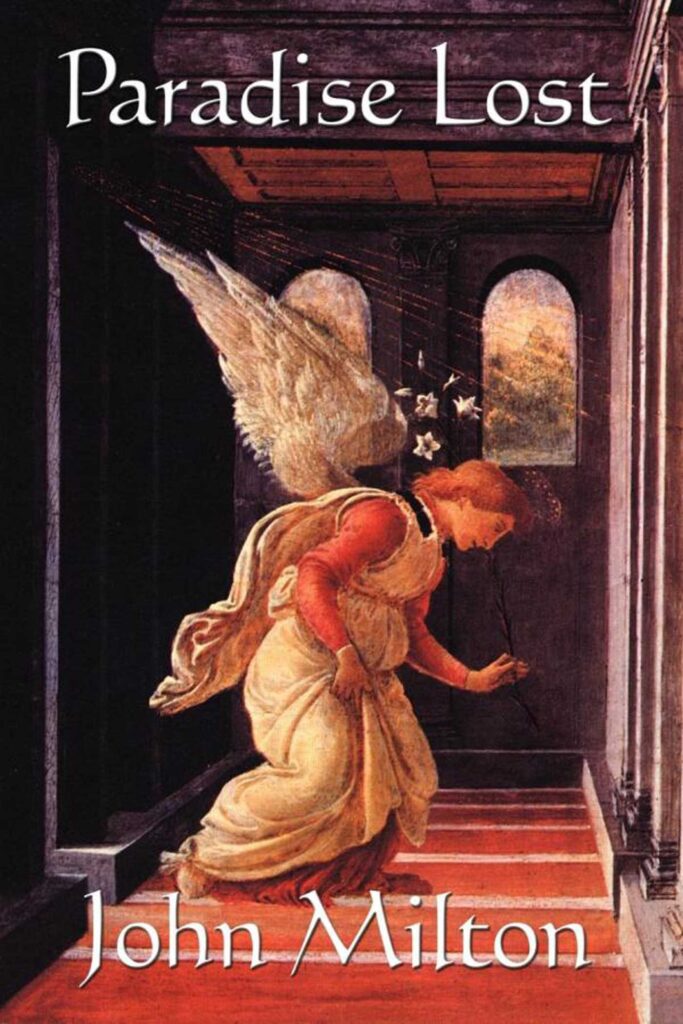
Paradise Lost by John Milton.
Book 1
Satan and his followers have been thrown out of Heaven.
They land in Hell, recover, and start planning revenge.
Satan gives a powerful speech and decides they’ll try to ruin God’s newest creation — humans.
Book 2
In Hell, the devils debate how to strike back.
They consider war, trickery, or leaving Heaven alone.
Satan offers to go himself and corrupt mankind.
He leaves Hell and flies through Chaos on the way to Earth.
Book 3
Back in Heaven, God sees Satan coming.
He explains to the angels that humans will fall, but they will do it by their own free will.
The Son (Jesus) offers to become human and save them through sacrifice.
Book 4
Satan reaches Earth and sneaks into Eden.
He sees Adam and Eve living in peace and starts feeling jealous.
He hides in the Garden, but angels find him and kick him out again.
Book 5
God sends Raphael to warn Adam about Satan.
Raphael tells the story of Satan’s rebellion in Heaven.
He reminds Adam that obedience is essential, and that temptation will come.
Book 6
Raphael continues: Satan started a war in Heaven against God.
For three days, angels fought angels.
Then the Son stepped in and ended it by throwing Satan and his army out of Heaven.
Book 7
Adam wants to know how the world was made.
Raphael explains how God created the universe in six days.
He describes the creation of light, land, animals, and finally man.
Book 8
Adam shares his personal story: how he woke up in Eden, met Eve, and fell in love with her.
Raphael warns him to stay focused on obedience, not just feelings.
Book 9
Satan returns disguised as a serpent.
He tempts Eve, saying the fruit will make her wise like God.
Eve eats it.
Adam, seeing what she’s done, eats too — choosing to be with her rather than obey God.
They fall from grace and realize they are naked and ashamed.
Book 10
God sends the Son to pronounce judgment.
Satan returns to Hell thinking he succeeded, but he and the demons are turned into snakes.
Sin and Death build a bridge from Hell to Earth.
Adam and Eve argue but later take responsibility and start to repent.
Book 11
God decides Adam and Eve must leave Eden.
Michael, an angel, shows Adam visions of humanity’s future: pain, war, murder, and death.
Adam is heartbroken but starts to understand the bigger plan.
Book 12
Michael shows the rest of the future: the coming of Jesus, who will one day save mankind.
He explains that redemption is possible, even after the Fall.
Adam and Eve leave Eden, sad but with new hope for the future.
1. What happens to Satan and his followers in Book 1?
A) They defeat God
B) They escape from Hell
C) They are thrown into Hell after rebelling
D) They repent and return to Heaven
2. What is decided at the council in Hell (Book 2)?
A) To surrender to God
B) To start a new Heaven
C) That Satan will corrupt mankind
D) To wait and see what happens
3. What does God say about free will in Book 3?
A) Humans are forced to obey
B) Humans will always be good
C) Humans are free to choose
D) Satan controls their actions
4. Who does Satan see in Eden in Book 4?
A) God and the Son
B) Gabriel and Uriel
C) Adam and Eve
D) Angels preparing war
5. What warning does Raphael give Adam in Book 5?
A) Never trust Eve
B) Satan is planning another war
C) Stay obedient to God
D) Earth will be destroyed soon
6. How is the war in Heaven ended (Book 6)?
A) Satan wins
B) The Son defeats Satan
C) Raphael destroys Hell
D) Angels forgive each other
7. What does Raphael explain to Adam in Book 7?
A) How Satan was created
B) The creation of the world
C) The fall of the angels
D) Eve’s future role
8. What does Adam share about himself in Book 8?
A) He regrets his creation
B) He was once an angel
C) He fell in love with Eve
D) He wanted to be alone
9. What major event happens in Book 9?
A) The angels return
B) Adam and Eve eat the fruit
C) The Son creates Eden
D) Satan repents
10. What punishment is given in Book 10?
A) Satan is forgiven
B) Eve is turned into a serpent
C) Satan and his followers become snakes
D) Earth is destroyed
11. What does Michael show Adam in Book 11?
A) A vision of the Son’s fall
B) The end of the world
C) The future of mankind
D) A new Eden
12. What final message does Michael give in Book 12?
A) There is no hope
B) A saviour will come
C) Eve is to blame for all
D) God regrets creating man
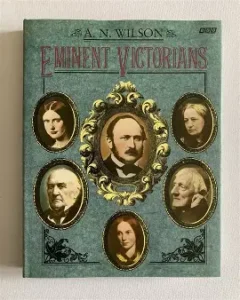
Lytton Strachey’s Eminent Victorians
Lytton Strachey’s Eminent Victorians – A New Biographical Method
Lytton Strachey’s Eminent Victorians (1918) marked a turning point in English biographical writing. Written over six years, the work comprises four miniature biographies—Cardinal Manning, Florence Nightingale, Dr. Arnold, and General Gordon. Each figure is emblematic of the Victorian era’s moral certainties and imperial ambitions.
Strachey’s method was revolutionary. He abandoned the 19th-century tradition of hagiographic, idealized biography in favor of psychological dissection and ironic detachment. His portraits are not mere historical accounts; rather, they serve as critiques of Victorian values—religiosity, patriotism, and moral superiority. He uses wit and satire to unmask the self-serving motives behind these so-called “great” lives.
For instance, Cardinal Manning is depicted as more politically ambitious than spiritually devout. Florence Nightingale, far from being a saintly nurse, is shown as a determined and obsessive reformer. Dr. Arnold appears narrow-minded and authoritarian, while General Gordon emerges as a delusional messiah figure whose imperial zeal leads to his tragic end.
George Sampson described Strachey as a “biographical novelist”, acknowledging that his method brings together factual biography and artistic imagination. By dissecting the inconsistencies and hypocrisies of his subjects, Strachey exposes the moral contradictions of the Victorian era, making Eminent Victorians a cornerstone of modernist biography.
T.S. Eliot’s “Hamlet and His Problems” and the Objective Correlative
T.S. Eliot’s critical essay “Hamlet and His Problems” (1919), part of The Sacred Wood, introduces one of his most significant critical concepts: the objective correlative. Eliot argues that every genuine emotion in literature must be expressed through a corresponding set of external facts or events—the objective correlative—that evoke the emotion in the reader.
Eliot controversially calls Hamlet an “artistic failure.” According to him, Shakespeare could not find an objective correlative to match Hamlet’s intense emotional state. The protagonist’s inner conflict—especially his reaction to his mother’s hasty remarriage—cannot be adequately explained by the play’s events. Thus, Hamlet’s emotions appear exaggerated and unjustified.
Eliot praises earlier and later Shakespearean tragedies—like Macbeth and Othello—for their successful use of objective correlatives. In contrast, Hamlet remains an enigma. Eliot’s analysis demystifies the romantic admiration for Hamlet and presents the play in a more clinical, psychological light.
This essay reflects Eliot’s modernist emphasis on impersonality in art and his belief that emotion must be grounded in structure. It also exemplifies his broader critical project of dismantling Victorian and Romantic reverence for individual genius in favor of more analytical approaches to literature.
T.S. Eliot’s Views in “The Perfect Critic”
In “The Perfect Critic,” T.S. Eliot elaborates on the qualities of an ideal literary critic. He argues that good criticism requires disinterested intelligence—a capacity to appreciate literature without personal or moral bias. The critic must be objective, sensitive, and refined in taste.
Eliot views criticism not as an inferior substitute for creation, but as a creative art in itself. The perfect critic doesn’t merely interpret or judge; he illuminates the text and refines the reader’s sensibility. Eliot insists that critics must avoid dogma and ideology and instead focus on the text’s aesthetic and emotional resonance.
He places Coleridge at the pinnacle of English criticism for his philosophical depth and subtlety, while dismissing Matthew Arnold as more of a cultural preacher than a true critic.
Ultimately, Eliot believes criticism and poetry are interdependent. Just as a poet must be a good reader, a critic must have the insight and intuition akin to that of a creator. His vision of criticism shaped 20th-century literary theory, emphasizing rigor, impersonality, and aesthetic discipline.
Eliot’s “The Possibility of a Poetic Drama” – Reimagining Theatre
In “The Possibility of a Poetic Drama,” T.S. Eliot advocates the revival of verse drama in modern literature. He critiques the dominance of prose in 19th-century theatre and argues that only poetic drama can convey the emotional depth and complexity demanded by modern audiences.
Eliot believes that poetry intensifies meaning and feeling, making it more suitable for tragic and metaphysical themes. He draws inspiration from Elizabethan drama, especially Shakespeare, and from French Symbolist theatre.
Modern playwrights, Eliot suggests, must not merely imitate the past but create a new poetic form that reflects contemporary life while preserving the lyrical and rhythmic qualities of verse. He sees opportunities for minor poets to experiment in this form and establish a new tradition of poetic theatre.
This essay is prophetic in anticipating Eliot’s own verse plays such as Murder in the Cathedral (1935), where he successfully merges ritual, poetry, and modern sensibility. For Eliot, poetic drama offers a medium through which literary tradition and modern innovation can be reconciled.
Graham Greene’s The Power and the Glory – A Catholic Novel of Sin and Redemption
Graham Greene’s The Power and the Glory (1940) is a landmark novel in 20th-century literature and a profound exploration of Catholic theology, sin, grace, and human weakness. Set in a Mexican state during the anti-Catholic persecution of the 1930s, the novel dramatizes the plight of an unnamed priest—nicknamed the “whisky priest”—who defies the law to continue his ministry.
The priest is deeply flawed: he is an alcoholic, cowardly, and the father of an illegitimate child. Yet, he embodies a paradox of grace: in spite of (and sometimes because of) his sinfulness, he becomes an instrument of divine mercy.
The novel’s central conflict is not merely political but spiritual. Greene contrasts the imperfect priest with a morally upright but spiritually empty lieutenant who represents the state’s atheistic ideology. In the priest’s final decision—to risk capture in order to hear a dying man’s confession—he achieves a form of martyrdom, not through glory, but through surrender and love.
The title itself is ironic: “the power and the glory” belong not to the oppressive regime, but to God, who works through human frailty. Greene’s novel is a classic example of Catholic existentialism, where salvation emerges through suffering, and human imperfection becomes the site of spiritual truth.
CONCLUSION
The works of Lytton Strachey, T.S. Eliot, and Graham Greene mark a crucial departure from the values and literary conventions of the Victorian age, reflecting a broader modernist revolt against moral absolutism, rigid idealism, and sentimental hero-worship. Each author, in his own way, redefined his genre to suit the complexities of the modern world.
Strachey, in Eminent Victorians, rejected the pious and celebratory tone of traditional biography, replacing it with irony, psychological depth, and historical skepticism. By exposing the contradictions and human flaws of once-revered figures, he challenged Victorian ideals of virtue and greatness.
T.S. Eliot, through essays like “Hamlet and His Problems” and “The Perfect Critic,” revolutionized literary criticism. His concept of the objective correlative and his insistence on intellectual discipline and impersonality in literature reflected a deep concern for structure, coherence, and emotional honesty. He also advocated for a revival of poetic drama, seeking a form that could reconcile tradition with modern sensibility.
Graham Greene, in The Power and the Glory, brought a new dimension to religious fiction by portraying spiritual struggle through morally flawed characters. His “whisky priest” is neither saint nor sinner in the traditional sense but a symbol of grace working through imperfection—a direct challenge to Victorian moral binaries.
Together, these writers dismantled the mythologies of the past and offered a more nuanced, realistic portrayal of human experience. Their legacies remind us that literature must engage with complexity, embrace ambiguity, and explore the emotional and moral depth of real life. In doing so, they laid the foundation for much of modern literary thought and practice.